

It all started with an email last October. Our export team at Haining Longtime received an inquiry from Michael, an Australian builder. The subject line was blunt: "Coastal cladding project – fed up with timber, need something that doesn't rot." He attached eight photos of a seaside house on the Mornington Peninsula. The existing pine timber cladding looked terrible – peeling paint everywhere, dark green mildew creeping out of the joints, and several planks near the ground already warped and curling at the edges. Classic salt-mist and moisture damage. Michael wrote: "The owners, the Morrisons, want a one-and-done solution. Either give me something that won't need a ladder and a paintbrush for 25 years, or they'll reluctantly switch to aluminium composite panels – but they hate the cold, container-like look."I read that and had a pretty good idea of what we were up against. Along the Australian coast, exterior wall options are limited, and each has its own headache. Michael later told me he'd already walked the Morrisons through a simple comparison table, laying out the hidden pitfalls of each choice:
| Material Option | The Morrisons' Concern | Michael's On-site Experience |
| Preserved timber (pine / merbau) | Already burned once – no desire to repaint | Needs maintenance every 2–3 years near the sea; otherwise deforms within three years |
| Aluminium composite panel (wood-grain finish) | Looks like a shipping container – too cold for a holiday vibe | Salt mist can corrode the aluminium core through any pinhole in the coating; dents mean full-panel replacement |
| Fibre cement board | Texture looks fake up close; hollow sound when tapped | Requires periodic repainting; once the coating ages, water absorption spikes and mildew returns |
| WPC co-extruded cladding | Worried it might look plasticky or have an artificial grain | Michael had never used it before – needed verification |
I.Samples, skepticism, and a short video
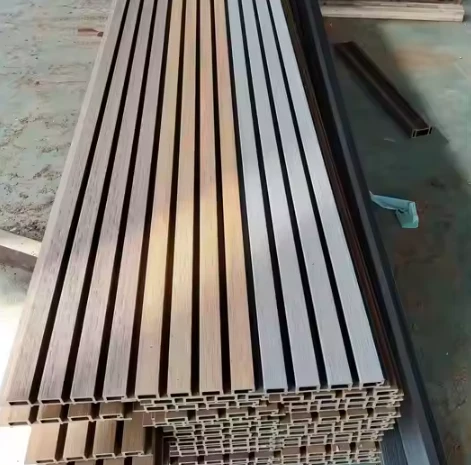
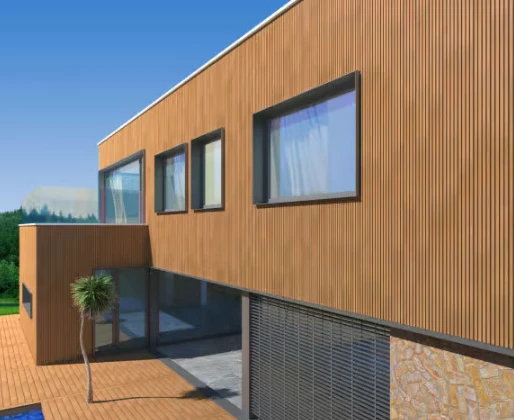
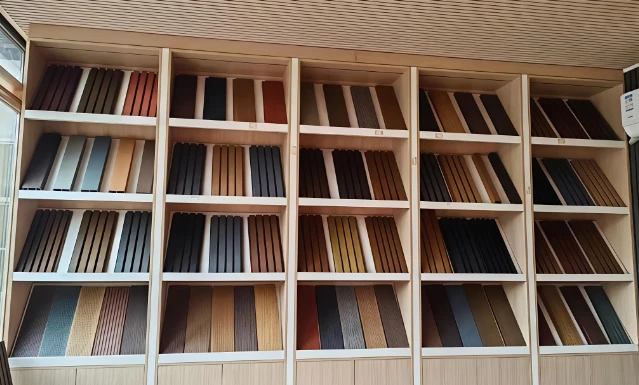
We sent Michael cut samples of our 165×21mm co-extruded wall panel in a dark teak colour with synchronised embossed wood grain. A week later, he messaged us: the Morrisons had placed the sample on their outdoor dining table, side-by-side with their own teak furniture, and stared at it all day. They even poured two cups of coffee over it to test stain resistance. Then they put it next to a leftover fibre-cement board and a scrap aluminium-composite panel from a neighbour.Emma, the owner, relayed through Michael: "The grain is three-dimensional – when I run my fingernail across it, it follows the texture, not like that fake pressed pattern on cement boards. But can you guarantee it'll stay like this five years from now?"That was a fair question. Instead of sending a lab report, we did something more direct: we pulled a real-world video from our factory archive – the same panel model installed on a island-side guesthouse in Zhoushan, China, back in 2019. The video was shot in August 2024, after five typhoon seasons. The colour had faded slightly lighter than new, but the grain remained intact – no warping, no mildew spots, and even the grooves looked clean after rain wash. Emma watched and said: "Okay, I'm convinced, but only if it looks like this after 5 years." We all breathed a collective sigh of relief at our desks.II.A minor hiccup during installation
The Morrisons' house needed 92 square metres of cladding. Michael's crew planned to finish in five working days. The actual timeline matched the estimate closely:| Day | Work | Notes |
| Day 1 | Remove damaged pine cladding, inspect vapour barrier, straighten battens | Completed as scheduled |
| Days 2–3 | Install vertical furring strips, lay insect mesh and starter profiles, begin panel mounting | On track – one worker could lay ~18㎡ per day |
| Day 4 | Almost complete; fit corner trims and edge profiles | One panel slipped out of alignment due to thermal expansion in the morning – fixed with a hairdryer in 2 minutes |
| Day 5 | Clean protective film, install top flashing, final inspection | Approved – Emma deleted her painter's contact on the spot |
III.What they finally chose – and the specs that mattered
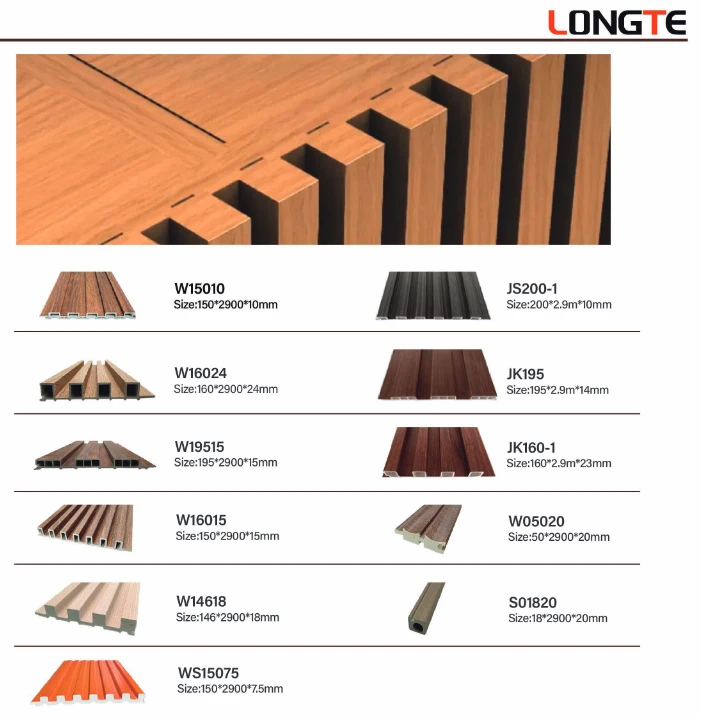
The panel they selected was our LT-WPC-WP165 co-extruded series. Rather than bombarding Michael with data sheets, I highlighted just four points most relevant to his project, in plain language:- Water absorption: ≤0.8%. Salt spray won't soak into the board, so there's no breeding ground for rot or mildew. Solid timber typically runs 10%–20%, and fibre cement can spike even higher once its coating degrades – this is a whole different league.
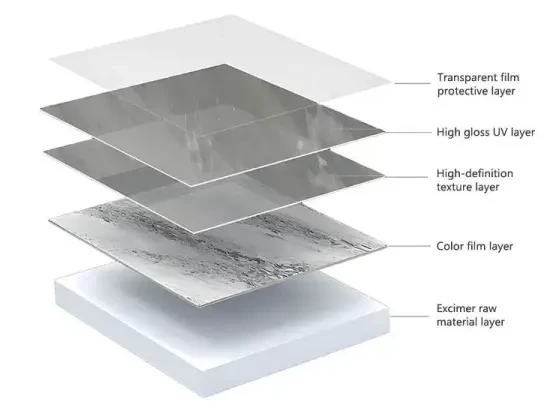
- Top-layer thickness: ASA/PMMA co-extruded skin ≥0.5mm. This protective "shell" is more weather-resistant than many automotive exterior parts. By comparison, aluminium composite panels usually have only a 0.02–0.03mm fluorocarbon coating – a magnitude thinner, and far less impact-resistant.
- Salt-spray test: After 2,000 hours of neutral salt spray, the colour difference (ΔE) was just 2.1. Mornington Peninsula's salt mist is harsh, but it never reaches 2,000 continuous hours – so we've built in a huge safety margin.
- Linear thermal expansion coefficient: ≤3.5×10⁻⁵/℃. That's exactly why we recommend leaving expansion gaps, and it also explains that "morning misalignment" issue. Aluminium composite has a lower coefficient (≈2.4×10⁻⁵), but it's installed with large-area locked edges – if not done perfectly, summer heat can cause oil-canning (those wavy walls you see in many coastal Australian neighbourhoods).
| Parameter | Value | Plain-English meaning |
| Cross-section | 165mm × 21mm | Width-to-thickness ratio gives a traditional timber-board look |
| Unit weight | ~2.9 kg/m | Light enough – friendly to the substructure |
| Core material | 60% wood fibre + 35% HDPE + 5% additives | Recycled plastic + wood fibre – no chemical preservatives |
| Co-extruded skin | ASA/PMMA alloy, ≥0.5mm thick | Extremely UV- and corrosion-resistant; impacts rarely reach the core |
| 24h water absorption | ≤0.8% | Almost no uptake even after a full day soaked |
| Flexural strength | ≥28 MPa | Handles wind loads; won't break under normal pressure |
| Colour difference after 2,000h xenon-arc ageing | ΔE < 5 | Barely noticeable colour shift after years of sun exposure |
| Fire rating | B1, self-extinguishing | Cigarette butts or barbecue sparks won't ignite the wall |
| Factory warranty | 25 years (non-structural cladding) | Outlasts most mortgage terms |
IV.Four cladding options – the total cost picture
Michael later told us that the Morrisons didn't make their final decision based on any single standout number. They laid out the whole-life costs for all four options on the table. Here's that comparison, reconstructed – useful for any homeowner in a similar spot:| Aspect | Haining Longtime WPC Co-extruded | Preserved Timber (Pine/Merbau) | Aluminium Composite (Wood-grain) | Fibre Cement (Coated) |
| Weather resistance | Excellent – 2,000h salt-spray ΔE<2.1, no rot or mould | Needs repainting every 2–3 years, otherwise cracks and blackens | Coating powders in ~5 years; salt mist causes blistering | Coating ages in 5–8 years; once damaged, absorbs water and softens |
| Texture & feel | Synchronised embossed grain – warm, with tactile resistance | Natural wood grain (the most beautiful, but high-maintenance) | Cold metallic feel; wood print looks artificial | Blurred pressed texture; cold and hard to the touch; hollow sound |
| Water absorption | <0.8% | 10%–20% | Non-absorbent (but edge seepage can corrode the aluminium) | Spikes sharply after coating failure |
| Maintenance cost (20 years) | Nearly zero – just occasional water rinse | ~A$4,000–6,000/year for repainting | No painting, but dents require full-panel replacement | High-pressure wash + recoating every 5–8 years |
| Installation | Hidden clips, dry-hung; ~18㎡/day; individual panels replaceable | Nailed or glued – disassembly often damages boards | Large-area locked edges – difficult to remove | Nailed or hung – heavy boards, dusty cutting |
| 20-year total cost | Moderate initial + zero upkeep = most cost-effective | High initial + ongoing maintenance = highest | Low initial + premature replacement = hidden expense | Medium initial + cyclical coating = significant hidden cost |
| Best for | Owners who hate ladders, want wood texture, and look at total cost | Those willing to maintain regularly and prize natural authenticity | Budget-first commercial projects with low texture expectations | Projects that require fire rating and accept periodic recoating |
V.photo from Emma later
In March this year, as autumn settled in the Southern Hemisphere, Emma sent us a picture of the family standing in front of their new wall, all in short sleeves, with the evening sun washing the cladding in a warm teak hue. Her note read: "Still looks like the day you installed it. No regrets." For people like us who make exterior cladding, that kind of photo means more than getting the final payment. It also reinforced our conviction that in harsh coastal, high-UV environments, WPC wall panels aren't really competing on "green concepts" – their real edge is driving down the long-term cost of ownership, while keeping the wall warm and textured. Unlike some materials that start ageing the moment they're installed.VI.If you're tired of wall maintenance, here's how to reach us
We don't rely on sales pitches. We'd rather you get a sample – see it, touch it, soak it, leave it in the sun for a few days. That's what convinced the Morrisons. If you already have samples of aluminium composite, fibre cement, or other materials, lay them side by side – the depth of grain, the warmth in your hand, the way water beads on the surface – those details speak louder than any brochure. Haining Longtime Industry Co., Ltd. has been manufacturing WPC cladding for over 12 years and exports to more than 40 countries. Tell us where your project is, how far from the sea, what colour and texture you prefer – we'll recommend the right spec for your actual conditions, not just a generic model.- For samples, colour swatches, or installation drawings, email our export team with the subject "Morrison-style inquiry" and we'll get back to you with tailored recommendations within 24 hours.
- Or visit our website athttps://www.longyuanpanels.com/to submit your project details online.A worry-free wall can truly change how a family enjoys their coastal life. That's the Morrisons' story – and it could be yours.
- Email:ltfriend01@jxlongtime.com.cn
- Phone: 0086 173 7761 1682
- WhatsApp: +86 173 7761 1682


