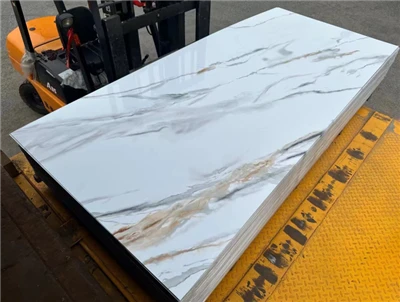
Artificial stone has great market potential in home and architectural decoration. Its smooth, vibrant colors, and jade-like finish are highly sought after by consumers. Artificial stone, a general term for artificial marble and agate, is made by mixing unsaturated polyester resin with fillers and pigments and undergoing a specific processing procedure. It offers advantages such as being non-toxic, non-permeable, easy to cut, and easily adjustable in color and shape.
Critical steps in the production and processing of artificial stone are its molding process and surface treatment. The molding process determines the inherent qualities of the stone, such as hardness, flexural properties, and temperature resistance, while the surface treatment influences its external appearance. While the molding process has become increasingly stable with the integration of assembly lines, the surface treatment still presents numerous challenges, including labor-intensive and time-consuming grinding and polishing, significant pollution, and a high defect rate. While sanding machines can be used to determine the thickness of artificial stone, fine surface sanding and side sanding must be done manually. Artificial stone also has a high surface hardness, making polishing and varnishing time-consuming and labor-intensive. Furthermore, existing technologies cannot achieve a high gloss finish with a rich, full appearance. The advent of UV coating technology effectively addresses these challenges in artificial stone surface treatment.Artificial stone coating process