I. The "Old Factory" on the Outskirts of Tashkent
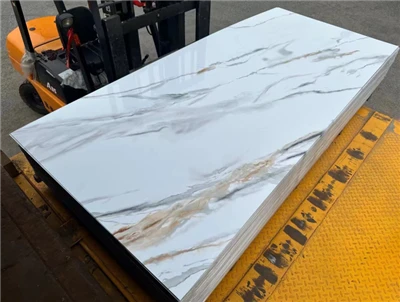
In the suburbs of Tashkent, Uzbekistan, there is a medium-density fiberboard (MDF) factory that has been running for nearly ten years. With an annual output of about 150,000 sheets, it mainly produces decorative panels for furniture and kitchen cabinet doors, supplying local building material markets as well as markets in Kazakhstan and Kyrgyzstan.
The owner, Alisher, is in his early forties. All the equipment in his workshop – from presses to sanding machines – is second-hand European lines that others had scrapped, but he has tuned them well. He often says, "The equipment is old, but I know its temper inside out." Yet on the lamination process, he ran into a big mess.
II. From "an occasional reject" to "a headache every day"
The trouble started last spring. Alisher switched to a new supplier's lamination film – the supplier claimed it was a "universal type that fits any board" and the price was 20% cheaper. The first few batches were passable, but when the rainy season came, everything fell apart.
On the workshop floor, freshly laminated boards stacked on pallets would develop large and small bubbles on the surface within half a day. Press them with a finger and they felt soft and spongy, like blisters on skin. Even more troublesome were the edges – they looked fine when stacked, but when the customer's forklift turned them over, the edges peeled off in whole strips, with the adhesive stringing out. The rejection rate shot up from less than 5% to over 12%. Workers had an extra end-of-day task – picking out defective boards – and it drove everyone crazy.
The worst part was colour variation. Boards produced only three days apart for the same order showed a full shade difference. Big clients would check against a colour swatch and reject the lot. One batch was returned twice – the freight cost more than the boards themselves. Alisher got so furious that he smashed his teacup in the office.
He tried adjusting the hot-roller temperature, changing adhesive brands, slowing down the lamination line speed, and even had workers wipe the substrate with a damp cloth – none of it worked. The problem was like a ghost: it would get better one day and come back the next.
III. We Sent a Man Who Spent Two Days on the Shop Floor
When we got his call, his tone was urgent: "Dare to send someone over? Don't just talk theory on the phone."
So we did. Our technician, Zhou, who has over a decade of experience in lamination, flew there with an infrared thermometer and sampling bags. When he arrived at the workshop, he didn't jump into action. Instead, he stood beside the production line for half an hour, watching how the workers placed boards, loaded rolls, and cleaned the rollers.
- First finding: The hot-roller temperature was set at about 185°C, but Zhou measured the actual roller surface temperature at only 170°C – the gauge was inaccurate. At that temperature, the local MDF substrate (which has a relatively high moisture content) releases internal moisture, and the vapour gets trapped under the film, creating bubbles.
- Second finding: The workers habitually applied an extra coat of curing agent on the glue roller, thinking it would "make it stick better." But Zhou took samples back and tested them: the water-based adhesive they used had too much polarity mismatch with our standard film's back coating. Adding extra curing agent actually reduced the initial tack, so the edges peeled under stress.
- Third finding: The colour varied between substrate batches because their sanding process was unstable – surface roughness was inconsistent. The same film applied to different roughness levels absorbed light differently, producing visible shade differences to the naked eye.
Zhou didn't ask him to modify the equipment or change the adhesive – Alisher was reluctant to do that because he had stocked up for half a year. Our decision was: adjust the film's back-coating formulation to match his adhesive and substrate specifically.
We did it in three steps:
- First trial batch: Reduced the polarity component in the back coating to improve wetting with his water-based adhesive. Bubbles decreased by half, but the edges were still a little weak.
- Second trial batch: Fine-tuned the formulation by adding a cross-linking agent, and at the same time recommended setting the actual roller temperature to 180°C (dial set to 195°C) and recalibrating the temperature sensor. This time bubbles virtually disappeared, and edge strength improved significantly.
- Third batch: Ran a full production cycle at his normal pace, with workers following their usual habits. The entire batch came out flat and colour-consistent.
Zhou stayed on site for every trial. He wasn't there to give orders – he took notes, chatted with the operators, and asked, "What feels convenient and what doesn't?" Eventually, even the workers said, "This film runs smoothly."
IV. What Film Did We Supply? – Wood-Grain PVC Lamination Film
The film we matched for Alisher is exactly our core product: Wood-grain PVC lamination film. Made from calendered PVC sheet, it features high-definition printing and embossing to deliver a realistic wood-grain appearance and even a tactile wood feel.
Key product specifications:
|
Parameter |
Value |
|
Substrate |
Calendered PVC film |
|
Thickness |
0.12mm – 0.50mm (customizable) |
|
Width |
1130mm – 1460mm |
|
Patterns |
Oak, walnut, maple, cherry, ash, and many more wood grains |
|
Surface finish |
Matte / gloss, optional UV-resistant topcoat |
|
Eco-friendly |
Formaldehyde-free, waterproof, moisture-resistant |
|
Suitable substrates |
MDF, HDF, plywood, particleboard, aluminium, steel, etc. |
|
Applications |
Kitchen cabinet doors, wardrobes, interior doors, commercial display cabinets, wall panelling, ceilings |


Troubleshooting comparison table:
|
Problem |
Root cause |
Our response |
|
Surface bubbles |
High substrate moisture content; improper hot-roller temperature; moisture trapped under film |
On-site temperature check; recommend suitable lamination temperature range; adjust back-coating formula to improve air release and work with adhesive system |
|
Edge peeling |
Mismatch between film back coating and water-based adhesive; insufficient initial tack |
Adjust polarity and add cross-linking agents in back coating to achieve deep compatibility with customer's existing adhesive |
|
Batch-to-batch shade variation |
Inconsistent sanding of substrate; surface roughness variation affects light absorption |
Customise film gloss level to minimise visual impact of substrate differences; keep colour samples for each batch to ensure consistent colour matching |
Why this film solved his problem?
Ordinary "universal" films have fixed back-coating formulations and easily fail with different production lines or adhesive systems. Our wood-grain PVC film supports custom back-coating formulation – we adjust it according to the customer's adhesive type, substrate characteristics, and equipment parameters to maximise adhesion.
In terms of cost, using board plus PVC film costs only one-fifth to one-tenth of solid wood. For mass-produced panel furniture, that translates into real competitive advantage.
V. FAQ
Q1: What substrates can your wood-grain PVC film be applied to?
A: MDF, HDF, plywood, particleboard, aluminium, and steel – all work. Our most typical case involved laminating aluminium honeycomb panels for interior partitions, and we've also applied it directly to cold-rolled steel sheets for appliance casings. The key is that the substrate surface must be flat, clean, and free of dust.
Q2: What is the minimum order quantity? Can a small factory buy from you?
A: For standard patterns, the MOQ is 500 square metres per colour. For trial orders, the bar is lower – we support starting with one or two rolls to run on your production line, and you only place a formal order after you're satisfied. We don't ask first-time customers to stock up in bulk.
Q3: Will your technician really come to our site? Is there a charge?
A: Yes, we really do send people. We've dispatched technicians to Central Asia, Southeast Asia, the Middle East, and Africa. For new customers, we offer free on-site technical support on the first order (travel expenses covered by us) to ensure the film runs smoothly on your line from the start. For returning customers expanding lines or changing substrates, we also provide on-site assistance.
Q4: How long does sampling take? How many days for international delivery?
A: For standard patterns: 3–5 working days to prepare samples; delivery to Central/Southeast Asia takes about 5–7 days, to Europe about 7–10 days. For custom colours (matching your colour swatch): 10–15 working days.
Q5: How to choose thickness and width?
|
Thickness |
Recommended use |
|
0.12–0.15mm |
Thin boards, curved surfaces, shaped parts |
|
0.16–0.25mm |
Standard flat panels, door panels (most common) |
|
0.26–0.35mm |
High-wear countertops, commercial spaces |
|
0.36–0.50mm |
Flooring, heavy-duty surfaces, outdoor use (with UV layer) |
For width, we can cut from 1130mm to 1460mm. Our regular stock width is 1420mm, which fits most standard boards.
For width, we can cut from 1130mm to 1460mm. Our regular stock width is 1420mm, which fits most standard boards.
VI. Numbers and Honest Words
The rejection rate dropped from 12% to 2.8% – the average over three consecutive weeks of monitoring. Now Alisher purchases over 500 rolls of wood-grain PVC film from us every month and no longer stocks from other suppliers.
He sent us a voice message on WeChat, which I transcribed: "I used to struggle with defective boards every day; now we don't have to rework them. The workers are more relaxed, and I can sleep well at night."
VII. Practical Advice for Peers
Don't get carried away by the word "universal." Every production line has temperature sensor deviations, every batch of substrate has different moisture content and sanding precision, and even the workshop's humidity on the day affects lamination results. A truly reliable film is not "good for everything" – it's "try it first, adjust it, and then match it" wherever it goes. We're willing to fly to Central Asia for a single production line – that's far more effective than guessing over the phone a hundred times.
VIII. What Happened Next
Last month, Alisher contacted us again. He said he was planning to add a PET lamination line and asked if we could come ahead of time to check the parameters. We said yes – same rule: see the site first, then run samples. He replied, "You come, I feel reassured."
Haining Longtime Industry Co., Ltd.
Main products: PVC Lamination Film (wood-grain, stone-grain, solid-colour series) | Hot Stamping Foil | PVC Wall Panels | SPC Flooring
Thickness 0.12mm – 0.50mm customizable | Width 1130mm – 1460mm | Back-coating formulation customisation | Formaldehyde-free · Waterproof · Wear-resistant
We welcome custom samples, and we welcome sending our people to your workshop for a look.
📧 Email: ltfriend01@jxlongtime.com.cn
🌐 Website: https://www.longyuanpanels.com/
📞 Phone: 0086 173 7761 1682