Can SPC Wall Panels Really Replace Bathroom Tiles? A Deep Dive into the "Watertight" Performance
In the realm of interior finishing, the battle for the ultimate bathroom wall material has never ceased. While ceramic tiles have long dominated the market, they come with inherent drawbacks: labor-intensive installation, grout lines prone to mold growth, and an uncomfortably cold feel underfoot. In recent years, a new material known as SPC wall panels has emerged as a strong contender in overseas markets. Can it truly live up to its reputation as the "tile killer"? We ventured into the laboratory of a leading Chinese manufacturer specializing in building material exports to put this "black technology" material to the test through extreme waterproofing experiments and a detailed technical analysis.
The Core Challenge
The Waterproofing Paradox in Bathroom Renovation
Traditional bathroom construction relies on the combination of ceramic tiles and grout. The underlying waterproofing logic is inherently "passive." Water can seep through grout lines into the mortar bed beneath. If the initial waterproofing layer on the substrate is compromised, this can easily lead to mold growth behind the walls, hollow tiles, and even structural damage over time. Furthermore, tile cracking due to thermal expansion and contraction is a frequent complaint.
SPC wall panels offer a paradigm shift, moving the responsibility for waterproofing from skilled installation to the material's intrinsic properties.
Structural Breakdown
The Waterproofing DNA of SPC Wall Panels
The product examined in this analysis comes from a Chinese manufacturer with over a decade of specialization in the SPC sector. Its claim of "100% waterproofing" is grounded in a unique four-layer integrated structure:
- UV Protective Layer: Provides not only scratch resistance but also forms the initial hydrophobic barrier.
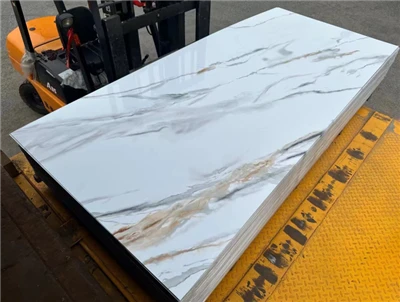
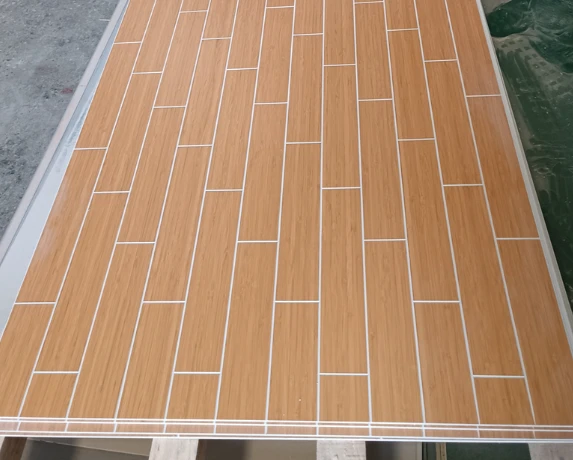
- High-Definition Decorative Layer: Utilizes advanced 3D printing technology to replicate high-end aesthetics such as marble and wood grains, offering a broader range of design options compared to standard ceramic tiles.
- Stone Plastic Composite Core: This is the critical component for waterproofing performance. Manufactured through high-temperature extrusion of limestone powder, PVC, and stabilizers, this core gives the panel its defining characteristic. Unlike traditional Wood Plastic Composite (WPC), this SPC core boasts a water absorption rate approaching zero.
- IXPE Acoustic Backing Layer: Provides cushioning, sound insulation, and an additional barrier against moisture vapor transmission from the substrate.


Data-Driven Validation: Moving Beyond Marketing Claims
To verify its viability as a tile alternative, the following extreme tests were conducted in a laboratory setting:
24-Hour Water Immersion
SPC wall panels were fully submerged in room-temperature water for 24 hours. The thickness swelling rate was measured post-immersion.
- Result: The data showed a water absorption rate of a mere 0.05%, with the thickness swelling rate recorded at nearly 0.00%.
- Comparison: Traditional multi-layer plywood typically exhibits a water absorption rate between 5% and 15% under identical conditions, often resulting in edge warping. This "Zero Swell" characteristic allows SPC wall panels to withstand direct, prolonged water exposure in shower areas without degradation.
Installation Methodology: A Revolution from Wet to Dry Construction
Beyond the inherent waterproof properties of the material itself, the ease of installation is a major advantage of SPC wall panels over traditional tiles.
Conventional tiling requires cement mortar, surface leveling, grouting, and a curing period. Completing the walls of a standard bathroom typically takes 3-5 days. In contrast, SPC wall panels utilize either a click-lock system or a glue-up installation method.
- Key Specifications: Panel thickness typically ranges from 4.0mm to 5.5mm, with a weight approximately one-third that of ceramic tiles.
- Construction Benefits: The panels enable "overlay" installation directly over existing, sound substrates like old tiles, eliminating the need for demolition and significantly reducing construction debris. A single skilled installer can complete the wall installation for a standard bathroom within 8 hours, allowing for near-instant use.