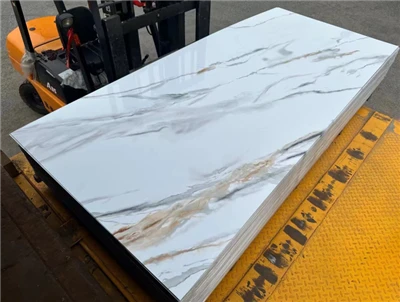
Resin-Based Artificial Stone
Resin-based artificial stone uses unsaturated polyester resin as a binder, mixed with natural marble crushed stone, quartz sand, calcite, stone powder, or other inorganic fillers in a specific ratio. Additives such as catalysts, curing agents, and pigments are then added. The product is processed through a series of steps, including mixing, curing, molding, demolding, drying, and surface polishing. Products using unsaturated polyester exhibit high gloss, vibrant colors, strong workability, and excellent decorative effects. This resin has low viscosity, is easy to mold, and cures at room temperature. Forming methods include vibration molding, compression molding, and extrusion molding.
Composite Artificial Stone
Composite artificial stone uses a combination of inorganic and organic polymer binders. Its production process involves first creating a cement mortar base using cement and stone powder. This base is then immersed in an organic monomer, which polymerizes under certain conditions. For the slabs, the base layer is made of a stable and inexpensive inorganic material, while the surface layer is made of polyester and marble powder. Inorganic binders include rapid-hardening cement, ordinary Portland cement, aluminate cement, fly ash cement, slag cement, and plaster of Paris. Organic monomers include styrene, methyl methacrylate, vinyl acetate, acrylonitrile, and butadiene, which can be used individually or in combination. Composite artificial stone products are relatively inexpensive, but the polyester surface is susceptible to flaking or cracking due to temperature fluctuations.
Cement-Based Artificial Stone
Cement-based artificial stone is made from various cements as binders and sand and natural crushed stone as coarse and fine aggregates. The stone is prepared through mixing, pressure curing, grinding, and polishing. Colorants can be added during the preparation process to create colored cement stone. Cement-based stone is easy to produce and inexpensive, but its decorative properties are limited. Examples include terrazzo and various decorative step tiles.
Sintered Artificial Stone
The production method for sintered artificial stone is similar to ceramics. Powders of feldspar, quartz, diabase, and calcite are mixed with hematite powder and a certain amount of kaolin. The typical ratio is 60% stone powder and 40% clay. The mixture is prepared using a slurry mixing method, shaped using a semi-dry pressing method, and then fired in a kiln at temperatures around 1000°C. Sintered artificial stone offers excellent decorative properties and stable performance, but the high-temperature firing required results in high energy consumption and a high cost.