I'm Jacob Lopez, Sales Manager at Haining Longtime Industry Co., Ltd – I've been in this role for nearly ten years, specialising in outdoor WPC flooring. This is a question I answer hundreds of times every year. The core truth about removing stubborn stains from outdoor WPC flooring is simple: use the right method without damaging the surface, and most stains can be saved. Below I'll walk you through the actual stain types we encounter, the cleaning methods we've validated over the years, and finally a real case from a long-time Australian client.


Barbecue grease, cooking oil, sauces
Dried-on grease is the biggest enemy of metal scrapers and strong alkaline cleaners.
- First, soak the stained area thoroughly with plenty of water to soften the surface.
- Make a thick paste with baking soda, apply it over the grease, cover with a damp cloth, and leave for 15–20 minutes.
- Use a soft bristle brush with warm water and a mild dishwashing liquid, scrub in circular motions – the grease will visibly lighten.
- Absolutely avoid kitchen heavy-duty degreasing sprays – their strong alkaline nature will corrode the WPC co-extrusion layer. I emphasise this to clients again and again.
Red wine, coffee, dark fruit juices
Pigments penetrate quickly, so timing is critical.
- Blot up spills immediately – plain water usually removes them.
- If the stain has already dried into a dark patch, use 3% hydrogen peroxide (available at pharmacies). Dampen a cotton pad and apply it locally for 10 minutes at a time – the colour will gradually break down.
- Rinse thoroughly with plenty of water immediately after. This works particularly well on light-coloured floors, but always test on an inconspicuous area first.
Mould and green algae
Most common in poorly ventilated outdoor corners, especially after the rainy season.
- Mix white vinegar and water at 1:3, spray onto the area, leave for 5–6 minutes, then scrub gently with a soft brush.
- You can also use our specially developed WPC cleaner, which removes mould roots more effectively.
- Keep a minimum distance of 30 cm when using a pressure washer – a closer spray will roughen the surface texture, and that kind of damage is irreversible.
Bird droppings and tree sap
- Soak the area with warm soapy water for a few minutes to soften hardened spots.
- Gently scrape off with a plastic scraper (about the hardness of an old bank card), then wipe clean with a damp cloth.
- A metal scraper will leave permanent scratches – I've seen far too many of those.
Rust stains
Usually from corroded feet on iron outdoor furniture.
- Diluted oxalic-acid-based rust remover can be used as an emergency measure – apply and leave for no more than 1–2 minutes.
- Immediately rinse with large amounts of clean water to ensure no residue remains. Because this method carries some risk to the protective layer, we only recommend it after other approaches have failed.
Several general principles that apply to all stains:
- Treat stains as early as possible – the longer you wait, the deeper they penetrate.
- Choose neutral or mildly acidic cleaners; avoid strong acids, strong alkalis, or chlorine-based bleach.
- Use soft tools – soft brushes, damp cloths, plastic scrapers. Steel wool and hard scrub pads are absolutely forbidden.
- After any cleaning, rinse the entire area with clean water 2–3 times and let it air dry naturally. Residual chemicals often harm the floor more than the stain itself.
A real-life case we often use to train our clients
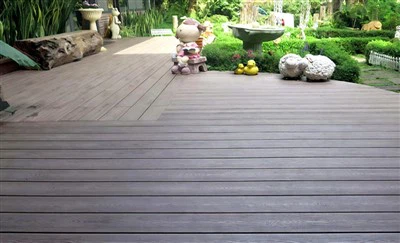
Last summer, our long-time client Mark from the Gold Coast, Australia, sent us an urgent email. He had installed our dark-wood-grain co-extruded WPC flooring on his deck. After a family barbecue, a large area under the grill was left heavily stained. He didn't notice it until two weeks later – dried-on barbecue grease, red wine, and dark marinade sauce stood out harshly against the light wood grain.
Mark had used a supermarket kitchen heavy-degreaser – the grease barely moved, but the edges of the stains started turning white. He worried it was a floor quality issue.
After looking at his photos, I judged that the strong alkaline cleaner had been left too long and had begun to mildly attack the co-extrusion layer – the whitening was an early sign of degradation. I gave him these steps:
- First, soak the entire area with clean water to soften the dried debris.
- On the heavy grease zones, apply a thick baking soda paste, cover with a damp cloth, and leave for 20 minutes.
- Scrub in circles with a soft bristle brush; once the grease lightened, switch to warm water and mild dishwashing liquid and scrub again.
- For the red wine stains, use a cotton pad dipped in 3% hydrogen peroxide, apply as a compress for 10 minutes to break down the pigment, then rinse.
- After all cleaning, rinse the whole deck with clean water three times and let it air dry.
Three days later, Mark sent back comparison photos – the stains were almost entirely gone, and the previously whitened areas had regained a uniform texture. He said at the time: "Now I know – it wasn't the floor's fault; I just used the wrong method." We later incorporated this case directly into our product care guide for new clients.
If you're reading this blog, you're probably facing a similar cleaning headache. If you're unsure whether a certain cleaner is safe, or if you've tried something that didn't work, feel free to reach out to our technical team at Haining Longtime Industry. With over a decade of exclusive focus on outdoor WPC flooring, we'd rather give you the right approach before problems arise – so your deck stays beautiful for years to come.
Haining Longtime Industry Co., Ltd.
Jacob Lopez
Senior Sales Manager / Outdoor Flooring Application Consultant