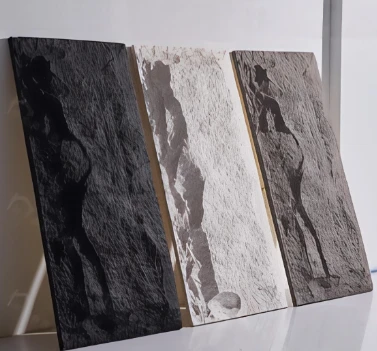
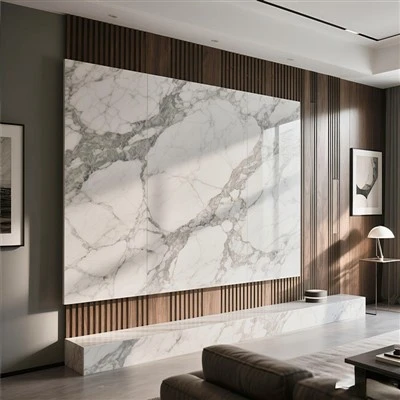
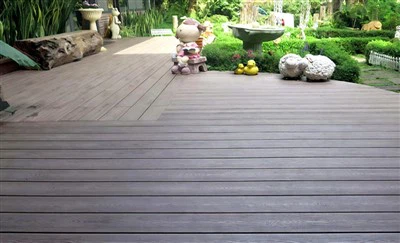
Hello everyone, I'm David Smith. I've been responsible for foreign trade and technical consulting in polyurethane decorative materials at Haining Longtime Industry for nearly 15 years. Over this time, we've seen PU mushroom stone evolve from a niche product into a favorite for exterior wall renovations, interior accent walls, and commercial space design. But as the market heats up, so do the pitfalls. Every week, I receive sample comparisons and complaint photos from clients-many of whom have paid a premium only to end up with products that fade within six months or crumble at the slightest touch. Today, I want to take a dual perspective-as a seasoned salesperson and a quality controller-to systematically address: how to select truly high-quality PU mushroom stone.


1. Don't Just Look at the Surface-The "Heart" Is What Really Matters
The "meat" of PU mushroom stone is rigid polyurethane foam or microcellular foam. Its formulation and processing directly determine how it will perform a decade later.
Key Point: Raw Material Purity & Density
High-quality products must use 100% virgin polyurethane raw materials. Many low-cost alternatives, however, heavily incorporate recycled material, cheap fillers, or even cement powder to add weight. Here's how to tell them apart:
- Check the cross-section/back side: Premium PU mushroom stone has a fine, uniform cross-section with no obvious pitting, collapse, or graininess. Impurity-laden products show a rough, dull back, sometimes even black specks.
- Heft it: Good PU stone typically has a density of 0.35–0.5 g/cm³-light to the hand but not insubstantial. If a sample feels unusually heavy and has an abnormally hard surface, it's almost certainly overloaded with cheap calcium powder. Such boards become brittle in winter and will soon crack at the edges after installation.
- Smell it: Virgin PU products give off a faint resinous odor right out of the mold, which dissipates quickly with ventilation. Inferior materials have a pungent, sour, or rancid smell that lingers for months after installation-a disaster for indoor environments.
Real-World Case: Last year, an Australian client, John, came to me with samples from another supplier. His café façade project had developed extensive chipping and faded, dull colors in just eight months. When I examined the broken pieces he sent, the backs showed a chalky white powder and snapped easily-classic signs of over-filling and impure raw materials. He later re-installed with our A1-grade virgin-material PU mushroom stone. Three years on, exposed to sea breeze and harsh sun, it remains intact with no chipping complaints.
2. Texture and Color-The "Revealing Mirror" of Craftsmanship
The beauty of mushroom stone lies in its realism; how long that beauty lasts depends on the coloring process.
Key Point: Mold Precision & Self-Release Technology
Truly high-quality mushroom stone isn't simply cast from natural stone; it's formed using high-precision CNC-engraved silicone molds and closed-mold foaming. The surface displays natural stone patterns, micro-cracks, tactile grain, and even "rust" effects-each piece with a unique texture. Low-end products, made with open-mold foaming, have flat, repetitive surfaces that scream "plastic imitation."
Key Point: Pigment System & UV Protection
Color is the dividing line for longevity. We consistently use imported weather-resistant pigments and incorporate UV stabilizers directly into the raw material-so the color is "grown" into the material. Many cheap alternatives rely on surface spray painting, even ordinary exterior wall paint, which fades and mottles under sunlight.
Test Methods: Gently scratch the surface (in a hidden spot) with your fingernail. A quality PU stone will not peel or flake; the color runs all the way through. Also, ask the manufacturer for xenon-arc aging test reports or QUV accelerated weathering data. A confident factory will provide them without hesitation.
Real-World Case: A Malaysian interior designer selected a cheap, spray-painted mushroom stone for a high-end restaurant's accent wall. Within three months, the area near the spotlights developed yellowing "shrinkage spots" that starkly contrasted with the rest of the wall-leading to a claim from the owner. She then turned to us for a custom-colored, internally pigmented PU mushroom stone in the same shade. After over a year under identical lighting, no visual color difference was detectable. Even our accompanying ΔE < 2 quality report became her evidence of professionalism to her client.
3. Fire Safety & Environmental Compliance-Never Take Chances
In building decoration, safety is the bottom line. The fire performance of PU mushroom stone depends on its formulation. High-quality products must pass B1-grade or higher flame-retardant testing (self-extinguishing, no molten drips that ignite filter paper).
Credentials to verify when purchasing:
- Do they have third-party fire test reports (e.g., SGS, Intertek BS EN 13501-1 or ASTM E84)?
- Do they provide REACH, RoHS, and other environmental certifications-especially for EU-bound projects?
- You can also perform a simple lighter flame test (in a safe setting): Hold a lighter flame to the edge for 5 seconds. Good flame-retardant material will only char under the flame and self-extinguish immediately upon removal, with little white smoke. Inferior material will continue burning with black smoke, dripping, and a sharply acrid odor.
With every shipment, we include batch-specific fire and environmental test reports-because no commercial building can afford the risk of fire or toxic fumes. Can your supplier do the same?
4. Toughness & Compression Resistance-The Invisible "True Skill"
PU mushroom stone must accommodate minor wall movements and withstand handling and impact. Quality PU stone exhibits rubber-like toughness and resilience.
180-Degree Bend Test: Cut a thin strip (from an edge) and slowly bend it 180 degrees. Premium products will stretch synchronously with no cracking or whitening; inferior ones will snap outright or show fragmented surface coating.
Foot-Pressure Recovery Test: Lay a full board flat and step on it with normal body weight. A good board will slightly indent but quickly spring back to shape without permanent depression. This simulates on-site bumping scenarios.
5. Stable Supply & Customization Capability-More Important Than Low Price
As a veteran in foreign trade with over a decade of experience, I've learned one thing deeply: one-time deals chase price; long-term partnerships rely on delivery and customization. High-quality PU mushroom stone should be "reproducible art."
- Can they guarantee batch-to-batch color consistency? We use an automated pigment metering system and mold management to achieve color difference ≤ 0.8 on re-orders.
- Can they offer rapid sampling and custom stone-matching? Many projects demand matching existing stone, requiring a manufacturer's technical team to have an extensive stone-replication database.
- Do they have real project references? You can request a video factory tour or real-time production viewing-not just polished pictures.
Frequently Asked Questions (FAQ)
Q1: Will PU mushroom stone fade? How long does it last?
A: It entirely depends on the coloring process. High-quality PU mushroom stone with internally added pigments + UV stabilizers has color that penetrates deep into the material, offering an outdoor service life of 15+ years, with only mild natural aging-never mottling. Cheap spray-painted products may fade and become blotchy within six months of sun exposure. We attach QUV accelerated aging test reports for every batch, with ΔE ≤ 2, making lifespan quantifiable.
Q2: Is PU mushroom stone fire-retardant? Is it safe for home use?
A: High-purity PU mushroom stone with B1-grade flame retardancy self-extinguishes away from flame, produces no molten drips, and emits low smoke and low toxicity. It is safe for interior accent walls and commercial spaces. Always request third-party fire test reports-never rely on verbal promises. We include SGS/Intertek batch-specific reports with every shipment.
Q3: Is PU mushroom stone complicated to install? Does it need professional workers?
A: Installation is very simple and DIY-friendly. Generally, you just use structural adhesive or PU-specific glue to bond directly to a flat wall surface-no furring strips required. The boards are lightweight and easy to cut; ordinary carpenters or renovation workers can handle it, saving labor and time. We provide detailed installation guides and videos with every order, ensuring even beginners can do it.
Q4: Will there be color differences between batches? Can re-orders match?
A: This is exactly where factory capability shows. Small workshops rely on manual mixing, leading to large batch-to-batch variations. We use an automated pigment metering system and strict mold-batch management to control formulations, keeping re-order color differences ≤ 0.8-virtually indistinguishable to the eye. For large projects, we also offer same-batch production to ensure zero color variation across an entire wall.
Q5: Can you customize colors and textures based on my natural stone sample? What's the minimum order quantity?
A: Yes. We have an extensive natural-stone replication database and CNC mold-engraving capabilities. Just provide high-resolution photos or a physical sample, and we can create exclusive molds and color matches. Custom orders generally have a minimum of 300–500 m², depending on mold complexity. Standard colors and sizes typically have no MOQ-feel free to inquire.
Q6: Is PU mushroom stone environmentally friendly? Does it have an odor?
A: Premium PU mushroom stone is an eco-friendly material, passing REACH, RoHS, and other tests-free of formaldehyde, heavy metals, and other harmful substances. Upon opening, there may be a very faint resinous smell that fully dissipates within 1–2 days of ventilation, posing no risk to people or the environment. If a product has a strong, pungent odor that persists, it indicates impure raw materials-return it immediately.
Closing Thoughts
Choosing high-quality PU mushroom stone is not really about selecting a "product"-it's about choosing a "manufacturer with principles." At Haining Longtime Industry, we treat raw material purity, mold precision, weather-fast colorfastness, and fire-retardant environmental compliance as four non-negotiable lifelines. The feedback from projects along the Australian coast, the Middle Eastern deserts, and the cold Nordic regions repeatedly confirms a simple truth: two pieces of mushroom stone may look alike on the outside, but their lifespan and safety can differ by a decade.
If you're preparing to source PU mushroom stone for your project, feel free to use this guide as a checklist. And you're always welcome to contact me and send in samples-I'll personally conduct a free material diagnosis, using data and experience to help you avoid the pitfalls.
Haining Longtime Industry Co., Ltd - Making every wall stand the test of time.
David Smith
Foreign Trade & Technical Consulting
June 30, 2026