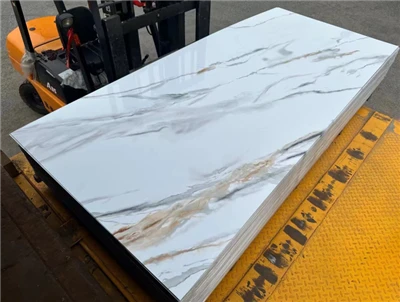
In Guadalajara, Jalisco, Mexico, interior designer Diego Hernández took on a new project: transforming a private clubhouse in a colonial courtyard into a high-end social space that blends modern aesthetics with natural textures. The owner had only one requirement for the walls: "I want the feel of wood, but absolutely none of the hassle that comes with wood."
This request ultimately drove Diego to conduct an almost obsessive comparative experiment. And the winner of that experiment was Haining Longtime's WPC wall panels (indoor fluted panels) from China.


Initial Resistance: "WPC? Isn't that just plastic?"
With 15 years of experience, Diego has an almost purist attitude toward materials. When his Chinese supplier first recommended WPC indoor fluted wall panels, his response was blunt: "I've seen too many plasticky wood grains. Putting something like that in my projects would be an insult to my design."
But the supplier didn't give up. They sent him a 60 cm long sample along with a technical document. The sample was walnut-colored, with visible wood grain pores and grooves. Diego admitted that he hesitated the first time he touched it – The textured surface beneath his fingertips was almost indistinguishable from the genuine North American black walnut sample in the workshop.
"Alright, let's see if it's all talk." Diego decided that before making a final material selection, he would subject this WPC fluted panel and three other alternatives to a set of "homemade tests" he had learned from automotive durability testing.
Test Report: The Torture Test of 23 Samples
Diego prepared samples from:
- Group A: Haining Longtime WPC wall panels (Model HL-iGrid 15025-WN, walnut color, ASA co-extruded layer)
- Group B: Locally sourced South American teak solid wood fluted panels (with moisture-resistant coating)
- Group C: A common PVC foam fluted panel widely available in the Latin American market (claimed to be waterproof and moisture-proof)
- Group D: Another low-priced WPC fluted panel (no brand, noticeable granular texture on the substrate, printed wood grain)
*Each test used 5-6 parallel samples; results are typical. Below are excerpts from Diego's test log recorded on his phone.*
Test 1: 72-hour seawater immersion (simulating coastal humidity and salt spray crystallization)
Although Guadalajara is not coastal, the owner owns a beachfront villa plagued by salt spray issues, so Diego wanted the material to be universally suitable. He prepared a 3.5% saltwater solution using edible sea salt and fully submerged the samples.
- Group B (solid wood): Began warping at the ends after 48 hours. After 72 hours, cross-section expansion exceeded 9%, coating blistered, irrecoverable.
- Group C (PVC): No visible deformation, but uneven white stains appeared on the surface that could not be wiped off – the print layer had been penetrated by salt.
- Group D (cheap WPC): Substrate absorbed water, weight increased by 5.2%, surface wood grain paper delaminated and blistered.
- Group A (Haining Longtime): No dimensional change after 72 hours, no blistering or staining. Wiped dry with a cloth – weight gain negligible. Diego noted: "This stuff really doesn't absorb water."
Test 2: Simulated 10-year use scratching (key + steel wool)
Diego scratched each sample surface with a key tip using the same force, then rubbed back and forth 20 times with steel wool.
- Group B (solid wood): Paint layer scratched through, revealing light-colored wood; steel wool left numerous fine marks.
- Group C (PVC): Print layer scratched off to white substrate, irrecoverable.
- Group D (cheap WPC): Printed wood grain peeled off, revealing chalky base layer.
- Group A: Key left only a very faint gray mark, almost invisible after wiping with a damp cloth; steel wool area slightly lost gloss, but wood grain and color remained intact. The thickness and hardness of the ASA co-extruded layer proved effective.
Test 3: Live termite feeding (Diego called it "The Last Supper")
This was Diego's most exciting test. With help from a university insect lab, he placed samples in termite culture dishes and observed for 7 days.
- Group B (solid wood): Termites begin to gather and feed within 24 hours; by day 7, obvious tunnels were visible.
- Groups C & D: Termites did not actively feed but attempted to nibble edges, leaving tiny bite marks.
- Group A: Termites crawl across the surface but are unable to pierce it with their mouthparts; they eventually gathered on filter paper in the corner. The lab technician told him: "This material contains nothing on the termite menu, and its hardness exceeds their chewing ability."
Test 4: Strong sunlight exposure & temperature cycling
Samples were placed on a rooftop, exposed to Guadalajara's high-altitude intense UV light for 15 days, while being alternately hit with 40°C hot air and 10°C cold water daily.
- Group A: No noticeable discoloration, warping, or cracking. The synchronized embossed pattern has not delaminated due to temperature changes.
- Other groups: All showed varying degrees of fading, deformation, or film delamination.
*After the tests, Diego drew a table on his whiteboard. That table became the core basis for his report to the owner. *
Diego's Material Comparison & Selection Table
|
Comparison Aspect |
Haining Longtime WPC Fluted Panel |
Generic Non-brand WPC Fluted Panel |
Solid Wood Fluted (Teak, treated) |
PVC Foam Fluted |
|
Wood grain feel & appearance |
The textures are harmonious and consistent, with a realistic sense of depth and texture. |
Printed flat surface, smooth feel, plasticky |
Natural grain, ultimate authenticity |
Printed grain, blurry up close |
|
72h water immersion dimensional change |
Length change <0.1% |
Obvious expansion, substrate softens |
Severe warping |
No expansion, but surface stains |
|
Scratch resistance |
Protected by co-extruded layer; key leaves no deep marks |
Easily damaged, exposes substrate |
Paint damage irreversible |
Thin print layer, easily scratched to white |
|
Termite resistance |
Completely immune |
Edges can be nibbled |
Highly susceptible |
Almost no feeding |
|
Fire safety |
B1 grade, no flaming drips |
Usually no clear rating |
Flammable |
B1/B2 varies, dripping hazard |
|
Installation structure & method |
Clip-on dry installation, tight, no glue |
Simple tongue & groove, loosens with repeated disassembly |
Requires backing, adhesive, nailing |
Clip-on or adhesive |
|
10-year maintenance estimate |
No painting or maintenance needed |
3-5 years may see fading/delamination |
High annual maintenance cost |
Needs replacement in 5-8 years |
|
Comprehensive cost per m² (incl. install & maintenance) |
Medium |
Low (but high hidden replacement cost) |
Very high |
Low-Medium |
*Below the table, Diego added a conclusion: "Haining Longtime's WPC wall panels are the only product with no weaknesses in any test. It is not plastic imitating wood – it is a more advanced engineered wall material." *


Project Realization: A Quiet Transformation in a Manor Clubhouse
After selecting the material, Diego applied approximately 310 square meters of WPC wall panels in the clubhouse's lobby, cigar room, and circular corridor. The installation team was local and received only half a day of training on the dry-clip system.
"No glue, no dust, no waiting for drying time." Diego recalls that the clubhouse even hosted two private dinners during construction. The installation was so quiet and the project took only 6 days – 4 days ahead of schedule. The night after completion, the owner walked in for the first time, knocked on the wall with the back of his hand, and asked: "Where did this wood come from? The grain is even deeper than the solid wood paneling in my office."
Diego smiled and handed over the sample that had been soaked in saltwater, scratched with a key, and ignored by termites. On the back of the sample was written in marker: "Prueba #1 – Aprobado".

International Certifications: Making Rigorous Standards the Baseline
Diego's trust did not come from a single sample's lucky performance. Before receiving the sample, Haining Longtime had already provided his team with a complete set of third-party certification documents. These certifications were key to convincing the owner to adopt the new material.


Frequently Asked Questions (FAQ)
Q1: Are WPC indoor fluted panels truly eco-friendly? Do they have an odor?
A: Haining Longtime's WPC wall panels are manufactured with a formaldehyde-free formula. SGS tests show non-detectable formaldehyde release (ENF level). No benzene-based adhesives are used in production. Installation is glue-free dry-clip. There is no irritating odor on site, and the space can be used immediately without airing out.
Q2: Can WPC panels be used in humid environments? Will they mold?
A: This is a core advantage of WPC. The substrate has very low water absorption – 24h thickness swell ≤1.0%. It will not deform or mold from moisture. Even in coastal high-humidity areas or near bathrooms, it avoids the swelling and peeling problems of traditional wood panels.
Q3: Is installation complicated? Does it require specialized workers or tools?
A: Installation is very simple. This product features a direct snap-fit installation system.: just clip each panel into the track components – no nails, no glue. Ordinary installers can learn in half a day. One person can install 30-40 m² per day, greatly saving time and labor costs.
Q4: Will the surface fade? How do you clean and maintain it?
A: The surface is covered with an ASA/PMMA co-extruded protective layer, offering excellent UV resistance and weatherability. Daily cleaning just requires a damp cloth – no painting, no waxing. Even after years of use, the color remains stable, and maintenance cost is nearly zero.
Q5: How safe are WPC fluted panels in a fire?
A: Haining Longtime's WPC indoor fluted panels meet B1 grade (difficult to ignite). They self-extinguish away from flame, produce no molten dripping, and effectively slow flame spread, providing more time for evacuation. They comply with fire codes for hotels, offices, commercial complexes, and other public spaces.
Q6: Can colors and sizes be customized? What is the MOQ?
A: Yes, color and size customization are supported. Existing molds cover various profiles and lengths, and special textures or custom shapes can be developed for specific projects. For MOQ and lead times, please contact our engineering consultant directly, and we will provide the best solution based on project volume.
Let Materials Be Honest: Final Thoughts
Diego Hernández's "bias experiment" ultimately did not overturn his bias – it transformed it into a firm choice. This process perfectly reflects the product philosophy that Haining Longtime has always believed in: Only materials that can withstand questioning are worthy of being delivered.
We use synchronized texture to make wood grain not just a printed pattern, but rather a three-dimensional surface that can be touched. We use a co-extruded protective layer to make scratch resistance and moisture resistance not just data on paper, but real performance against keys, saltwater, and termites. We use a clip-on structure to make installation a clean, industrialized assembly rather than a craft dependent on skill. Every brutal test passed reflects material science's refusal to compromise with tradition.
This WPC indoor fluted panel did not know, when it came off the production line, that it would be soaked in saltwater, thrown to termites, or basking in the highland sunshine. It only knows that it was designed to be a wood that does not absorb water, does not attract insects, and does not scratch. And that is exactly what Diego – and owners in hundreds of projects worldwide – have been looking for: "The feel of wood, without the hassle of wood."
About Haining Longtime
Haining Longtime specializes in the R&D and manufacturing of WPC materials. Its WPC wall panel product line covers indoor fluted panels, wall cladding, ceiling systems, and more. The company independently masters co-extrusion surface treatment and synchronized texture technologies. Its products have passed multiple international certifications including Intertek, SGS, and CE, and are exported to North America, Latin America, Europe, and Southeast Asia. Whether for designer material selection, project procurement, or regional brand customization, we can accompany your project from the sample stage all the way to completion.
Website: https://www.longyuanpanels.com/
Email: ltfriend01@jxlongtime.com.cn
WhatsApp: +86 173 7761 1682
Phone: 0086 173 7761 1682