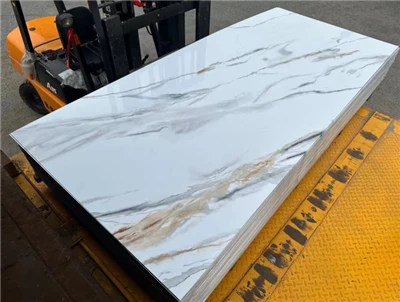
A building materials distributor based in Melbourne, Australia, placed an initial trial order for just one container of Interior WPC Wall Panels and, within six months, had scaled to four containers. The case is not complicated, but it is typical: start with a small trial order, watch sell-through after listing, and then expand around the best-selling colors. For distributors currently looking for a WPC fluted panel supplier, the sourcing logic, mixed-container approach and reorder criteria are directly transferable.
Note: Customer information has been anonymized. Order timing and data are based on email correspondence and order records between both parties.
I. Sourcing background: Not a lack of products, but a lack of a suitable mid-to-high-end fluted panel line
The distributor focuses on interior decorative materials, with customers mainly interior fit-out companies, retail stores and small project contractors. Locally, wood veneer and solid wood fluted panels are expensive and lead times are unstable. When projects are on a tight schedule, the sales team does not dare to make firm commitments.
The purchasing manager put it directly in communication: they needed a fluted panel line that "looks premium, installs easily and has controllable lead times" to supplement the existing wall panel category - not simply to find the lowest price.
Their main concerns were:
- Whether the surface texture looks natural: close to wood veneer from a distance, not obviously fake up close.
- Whether batch-to-batch color variation is controllable: the biggest fear for a distributor is that the first batch sells well but the second batch does not match in color.
- Whether density and hand feel are stable: too light or too soft will affect installation and after-sales.
- Whether documentation is complete: QC reports, color cards and packaging plans should be ready to show downstream customers.
- Whether lead time can be held: for regular colors, preferably within 30–35 days.
II. Purchasing decision: Samples first, then full-container discussion
The customer did not rush to place an order at the beginning. Instead, they compared several suppliers at the same time. We did not push a large order immediately; we sent color cards, samples and a mixed-container quotation based on the customer's market preferences.
The purchasing decision process roughly fell into four steps:
- Sample comparison: The customer compared samples with local wood veneer, focusing on texture, thickness and edge-trim effect.
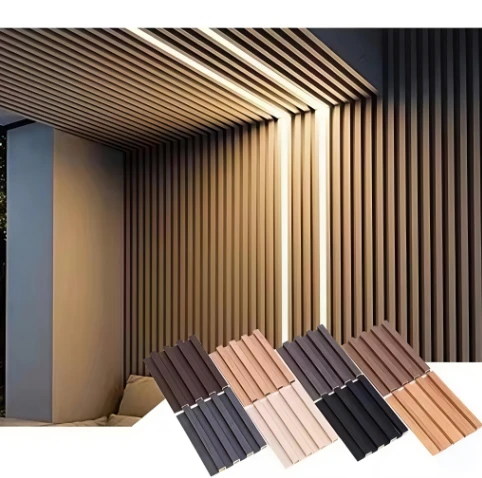
- Color card confirmation: First confirm three colors - Light Oak, Walnut and Matte Black - then discuss proportions.
- Quotation and MOQ discussion: Quote based on a 40HQ mixed container to avoid overstocking a single color in the first order.
- Lead time and QC documentation confirmation: The customer confirmed the production schedule for regular colors and reviewed QC reports and packaging instructions.
The customer ultimately chose Haining Longtime Industry Co., Ltd., not because the quotation was the lowest, but because the samples and documentation were relatively complete and subsequent communication did not involve repeated back-and-forth.
III. First order configuration: 1 mixed container, 3 best-selling colors as a trial
The first order was set as one 40HQ mixed container, with the main specification being 2900×1300mm Interior WPC Wall Panels, supplied with matching edge trims in the same color. Three colors were selected: Light Oak, Walnut and Matte Black.
The first-order mixed-container ratio was adjusted according to the customer's requirements:
|
Color |
First-order ratio |
Considerations |
|
Light Oak |
50% |
Neutral color, easy to match for residential and project use; positioned as the lead item first |
|
Walnut |
30% |
Commonly used in mid-to-high-end projects; enhances the perceived quality of the product line |
|
Matte Black |
20% |
A trial for commercial spaces and younger-style projects |
Packaging: 10 pieces per carton, film-wrapped with corner protection, shipped on pallets. The outer carton labels were left blank as requested by the customer to make it easier for the local warehouse to apply its own labels. For a distributor, this packaging method is not fancy, but it is convenient for receiving, sorting and secondary shipping.
IV. Listing and sell-through: Light Oak moved first
After listing, the customer promoted the products to three types of downstream customers:
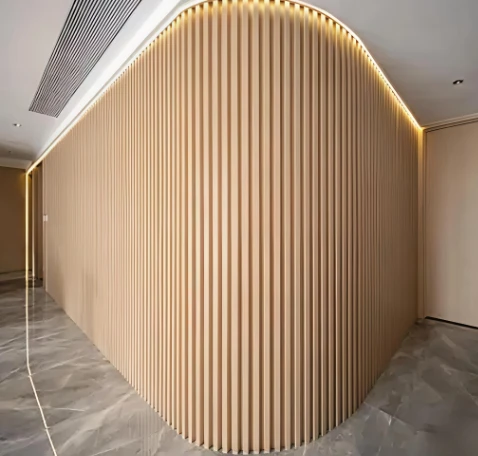
- Interior fit-out companies: for living room TV walls, feature walls and partial accent walls.
- Retailers: for in-store sample walls so customers can see colors and textures on site.
- Small project contractors: for apartment common areas, show flats and small commercial spaces.
Light Oak sold fastest. The reason is simple: neutral color, wide matching range and stable photo results. Matte Black moved more slowly in commercial spaces and younger-style renovation projects, but its average selling price performed well.
In terms of order rhythm:
- About six weeks after the first order arrived, the customer began asking about Light Oak replenishment and lead time.
- In the third month, the customer reordered two containers, with a clearly increased proportion of Light Oak.
- By the sixth month, the cumulative total had reached four containers.
V. Reasons for reorder: Stable quality, controllable lead time, responsive after-sales
The customer was willing to expand from one container to four containers, mainly based on four points:
- Batch-to-batch color variation was under control: fewer retail returns and relatively stable feedback from fit-out companies.
- Lead time was relatively controllable: regular colors could be scheduled within 30–35 days, so the sales team dared to make commitments to downstream customers.
- Fast after-sales response: For installation details and edge-trim matching issues, we could provide handling suggestions within 48 hours.
- Packaging suitable for warehousing: outer cartons and pallets did not add too much extra work for the local warehouse; sorting and secondary shipping were relatively smooth.
The purchasing manager said in a follow-up: "After the first batch went on the wall, feedback from fit-out companies was better than expected, so we dared to increase inventory of Light Oak."
VI. Data and materials: Case information at a glance
|
Item |
First order |
Reorder / Cumulative |
Notes |
|
Order volume |
1×40HQ |
Cumulative 4×40HQ |
2 containers added in month 3; cumulative 4 containers by month 6 |
|
Area |
Approx. 1,800 m² |
Approx. 7,200 m² |
Estimated based on mixed-container configuration |
|
Main specification |
159×12mm |
Mainly same specification |
Supplied with matching edge trims in the same color |
|
Colors |
3 colors |
Same 3 colors |
Proportion of Light Oak increased |
|
Lead time |
Approx. 35 days |
Approx. 30–35 days |
Regular colors; subject to production schedule confirmation |
|
Packaging |
10 pieces per carton |
Continued |
Film wrap, corner protection, pallet shipping |
|
Main channels |
Fit-out companies, retailers, project contractors |
Three channels in parallel |
Mainly residential and small projects |
Available materials include unboxing photos, warehouse receiving photos, in-store display photos, color card comparison photos, and records of the purchasing manager follow-up. For publication, 3–4 images are recommended; do not overload. Focus on the four stages: "unboxing - warehousing - shelf display - on-wall installation."
FAQ: Five questions distributors often ask
Q1: What is the MOQ for Interior WPC Wall Panels?
A: Regular orders start from one 40HQ, with mixed colors and mixed specifications available. The specific MOQ depends on the color combination and packaging method. We recommend providing your target market and estimated sales volume first so we can work out a mixed-container plan.
Q2: Can the first order be a mixed container?
A: Yes. The first order in this case was one 40HQ mixed container: Light Oak 50%, Walnut 30%, Matte Black 20%. The benefit of a mixed container is that you can test sell-through first without overstocking a single color from the start.
Q3: What is the regular lead time?
A: Regular colors take about 30–35 days, depending on production scheduling, quantity and color combination. The first order took about 35 days because packaging and labels needed confirmation; the reorder was scheduled in about 30 days.
Q4: How do you control batch-to-batch color variation?
A: Within the same batch, production is controlled according to retained samples. For different batches, we recommend retaining samples from the first order and producing subsequent orders against those retained samples. If a distributor serves both retail and project channels, it is best to confirm a standard color card on the first order to avoid downstream customers comparing different batches.
Q5: Can we get samples and color cards first?
A: Yes. We can send color cards, samples and packaging instructions according to market preferences. We recommend that distributors first use samples for local customer testing, then decide the color ratio for the first order.
CTA: Get a distributor price list / request color cards / view mixed-container options
If you are also looking for an interior WPC wall panel wholesale supplier, or would like to get a set of WPC fluted panel color cards and a mixed-container plan for a trial order, please contact Haining Longtime Industry Co., Ltd. We can provide distributor price lists, sample color cards, packaging plans and mixed-container recommendations according to your market.
Start with a small trial order and expand based on sell-through - this is more stable than stocking large volumes from the start.
- Get a distributor price list
- Request color cards and samples
- View mixed-container options