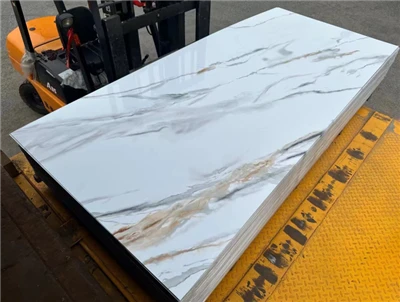
How long does it take to assemble the wall panels for a prefabricated bathroom in the factory?
For this buyer, the answer used to be 8 hours. Today, it is 3 hours.
The change did not come from overtime, or from more complex equipment. It came from a lighter wall panel - SPC wall panels. Recently, a modular building buyer that supplies prefabricated bathrooms to apartment, hotel, and temporary housing projects completed a switch in its wall panel system. The supplier was Haining Longtime Industry Co., Ltd. After the switch, wall panel assembly time per prefabricated bathroom unit dropped from 8 hours to 3 hours, overall weight fell by about 70%, and the transport damage rate dropped from 8% to below 1%.
The buyer did not disclose its name, but its procurement logic is typical: a prefabricated bathroom is not a traditional bathroom. The wall panels must withstand factory pre-assembly, long-distance transport, on-site lifting, and long-term moisture. If any link fails, it becomes rework, replacement parts, and delivery delays.

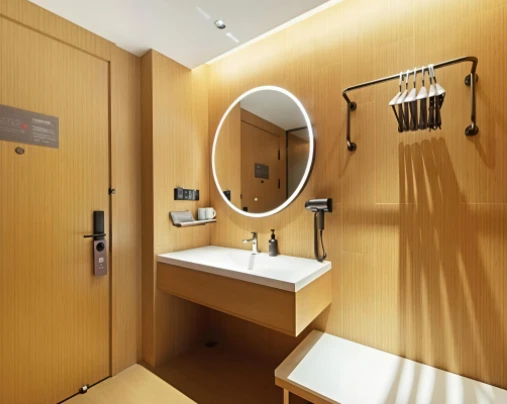
Procurement Task: Lightweight, Quick to Install, and Waterproof - No Compromises
This buyer's products mainly target modular building, prefabricated bathroom, and quick-install housing projects. End-use scenarios include apartments, hotels, and temporary housing. Order volumes are not stable, but size requirements are many.
The procurement team listed clear requirements:
- For prefabricated bathrooms, the panels must be lightweight, quick to install, and waterproof;
- They must withstand long-distance transport and on-site lifting, with high impact resistance;
- Under long-term high-temperature and high-humidity conditions, they must not deform, bulge, or delaminate;
- The supplier must support custom sizes and click-lock systems;
- Lead time must be stable, and immersion test reports must be available.
These requirements look ordinary, but in real screening, many wall panel options run into problems with weight, dimensional stability, or click-lock precision.
Where the Old Solutions Failed
The buyer initially used a tile system. Tile offered good waterproofing and a quality feel, but it was too heavy. A prefabricated bathroom already includes a base, piping, sanitaryware, and a frame. Add tile, and transport costs go up, lifting becomes harder, and edge damage becomes frequent. Project data showed that the tile system once reached an 8% damage rate during transport.
Later they tried PVC foam wall panels. This material was light and initially quick to install, but it performed poorly in high-temperature, high-humidity environments. Some projects saw deformation, bulging, and even problems at panel joints. For a prefabricated bathroom, once wall panels need rework, it is not just material cost - the delivery pace of the entire bathroom unit is slowed down.
The procurement team therefore turned its attention to SPC wall panels.
Why SPC Wall Panels Made the Cut
The core advantages of SPC wall panels match the pain points of prefabricated bathrooms.
- Weight. SPC wall panels weigh about 3–5 kg per square meter, far lower than a tile system. For prefabricated bathrooms that require batch transport and lifting, lower weight means lower transport cost, easier lifting, and less labor intensity.
- Dimensional stability. SPC wall panels have a low thermal expansion coefficient and do not expand or contract significantly under high-temperature, high-humidity conditions. The buyer focused on this during testing, because PVC foam wall panels had failed in exactly such environments.
- Water absorption. SPC wall panels have a water absorption rate below 0.1% and can withstand long-term immersion. The buyer required a 72-hour immersion test report from the supplier and only moved to mass procurement after confirming no expansion and no delamination.
- Installation. SPC wall panels can be pre-fitted with click-lock profiles, and on-site assembly requires no wet work. For a prefabricated bathroom production line, this means fewer processes, and less time spent on adhesive, leveling, and waiting for drying.
- Impact resistance. Wall panels are easily hit at the edges during transport and lifting. The toughness of SPC wall panels is better suited to this scenario, reducing damage and replacement probability.
The Eight Metrics the Procurement Team Watched
This procurement did not look only at price. The buyer broke down the evaluation metrics in detail:
- Weight per square meter;
- Thermal expansion coefficient;
- Water absorption rate;
- Impact resistance;
- Click-lock precision;
- Custom size capability;
- Lead time;
- Immersion test report.
Among these, click-lock precision was regarded by the procurement team as key to assembly efficiency. Even a small click-lock deviation increases alignment time on site and can even cause uneven joints. Therefore, before placing a mass order, the buyer required samples first to confirm click-lock fit, panel thickness, and dimensional tolerance.
Haining Longtime Industry Co., Ltd provided custom wall panels and click-lock systems based on the prefabricated bathroom base dimensions, door frame positions, and pipe openings. The two sides first made small-batch samples, then moved to formal orders.
Results
After switching to SPC wall panels, the buyer's prefabricated bathroom production line saw several direct changes:
| Metric | Before | After |
|---|---|---|
| Wall panel assembly time per prefabricated bathroom unit | 8 hours | 3 hours |
| Wall panel system weight | - | About 70% lighter |
| Transport cost | - | Down about 40% |
| Transport damage rate | 8% | Below 1% |
| 72-hour immersion test | Some options failed | No expansion, no delamination |
Wall panel assembly time per unit dropped from 8 hours to 3 hours, a reduction of about 60%. For prefabricated bathroom manufacturers, this is not only lower labor cost; it also means more bathroom units can be delivered in the same amount of time.
The transport damage rate dropped from 8% to below 1%, directly reducing replacement parts and on-site rework. The buyer said that with fewer wall panel problems, the on-site installation team's work became more controllable, and project handover became smoother.
Buyer Feedback
The buyer's project manager commented:
"SPC wall panels make prefabricated bathrooms lighter, faster, and more durable. After installation, our clients have had no mold issues at all."
Behind this statement is a change in modular building procurement logic. In the past, when buying wall panels, people often looked first at appearance and unit price. Now, buyers pay more attention to total process cost: transport, lifting, assembly, rework, after-sales, and the stability of wall panels in long-term humid environments.
Three Lessons from This Procurement
- First, modular procurement should prioritize lightweight, dimensionally stable wall panels. Weight and thermal expansion coefficient are not paper specifications; they directly affect transport, lifting, and on-site assembly.
- Second, click-lock precision directly affects assembly efficiency. Before mass procurement, samples must be confirmed in advance. The click-lock system looks like a small accessory, but on a prefabricated bathroom production line, it determines the pace.
- Third, transport impact resistance and immersion testing should be written into the procurement contract. For prefabricated bathroom wall panels, laboratory data is only the first step; performance after long-distance transport and on-site lifting matters just as much.
FAQ
Q1. What are the advantages of SPC wall panels for prefabricated bathrooms?
A. Lightweight, waterproof, dimensionally stable, and compatible with quick click-lock installation. They are suitable for modular buildings and prefabricated bathrooms.
Q2. How much can assembly time be shortened?
A. In this case, wall panel assembly time per prefabricated bathroom unit dropped from 8 hours to 3 hours.
Q3. How can long-term waterproofing be verified?
A. Ask the supplier for a 72-hour immersion test report and write the test standard into the procurement contract.
Q4. Do you support custom sizes and click-lock systems?
A. Haining Longtime Industry Co., Ltd can customize wall panels and click-lock systems according to prefabricated bathroom module dimensions, door frames, and pipe positions.
From 8 hours to 3 hours, from 8% to below 1%, from tile and PVC foam to SPC - this is not a simple material replacement, but an upgrade in procurement logic: calculating transport, lifting, assembly, rework, and after-sales together as cost. For modular builders, prefabricated bathroom manufacturers, and quick-install housing buyers, when wall panels are lighter, more stable, and more accurately clicked, delivery can be faster.
If you are looking for a customizable, quick-install, long-term waterproof SPC wall panel solution, Haining Longtime Industry Co., Ltd can provide technical solutions, samples, and test data.
Get modular bathroom SPC wall panel technical solution and samples → Contact Haining Longtime Industry Co., Ltd
Haining Longtime Industry Co., Ltd Contact Information
- Website: https://www.longyuanpanels.com/
- Email: ltfriend01@jxlongtime.com.cn
- Phone: 008617377161682
- WhatsApp: +86 173 7761 1682
- Address: No.10-1 Lianhong Road, Yuanhua Town, Haining City, Zhejiang Province, China
- Contact: Luka
- Main products: SPC wall panels, modular bathroom wall panels, click-lock systems, custom sizes