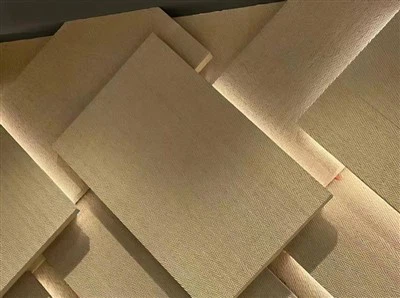
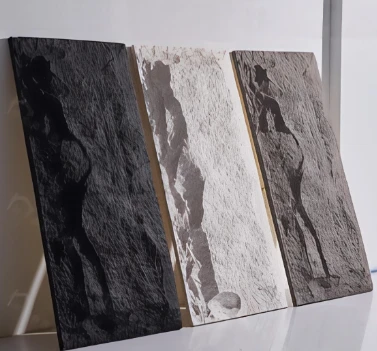
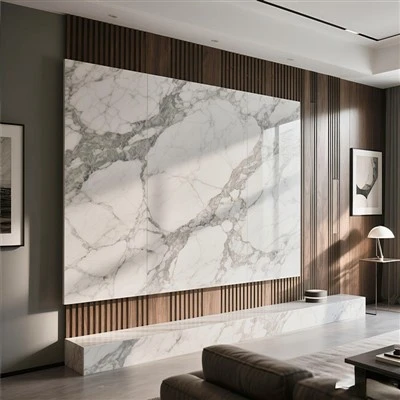
When I walk into a design showroom or sit down with an architect to discuss a new project, the question I hear more than any other is: "Are WPC wall panels really suitable for modern interior design?"
It's a fair question. A few years ago, if you told an interior designer you were specifying WPC wall panels, they would have pictured something that looked, well, like plastic. But that has changed dramatically. Today, WPC is showing up in projects that wouldn't have touched it before-boutique hotels, high-end residential interiors, corporate offices. In fact, 78% of designers now prioritise WPC for its blend of functionality and artistic flexibility.
Let me share why-from both my perspective as a business manager at Haining Longtime Industry Co., Ltd and through the lens of industry experts who work with these materials every day.
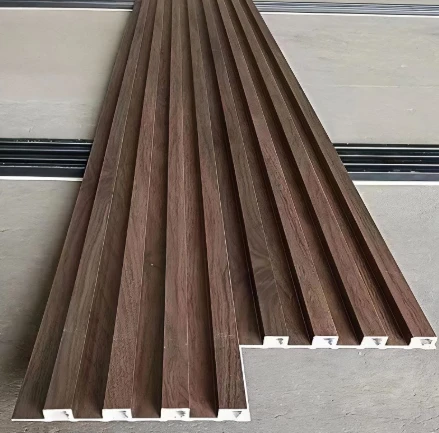
What Makes WPC Work for Modern Interiors
Wood-Plastic Composite (WPC) is exactly what it sounds like: a hybrid material that combines the warmth and natural beauty of wood with the strength and reliability of advanced composite materials. But the real story is in the performance.
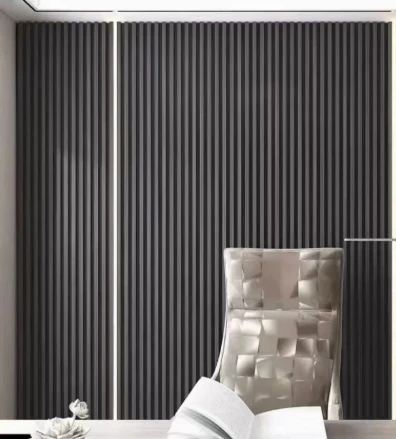
Aesthetic Versatility. Modern interior design is about texture, depth, and personality. WPC panels deliver on all fronts. Fluted patterns create vertical rhythm that instantly lifts the visual height of a room. Two-tone designs-walnut and charcoal, beige and teak-make bold graphic statements. 3D patterns with raised textures, wave designs, and abstract geometry catch light beautifully, creating dynamic shadows throughout the day. And for those who prefer understated elegance, neutral-coloured WPC panels combined with minimalist furniture create serene, eco-conscious spaces.
Durability That Designers Love. This is where WPC truly outshines traditional materials. Unlike natural wood or MDF panels, WPC wall panels do not warp, crack, or absorb moisture. They are fully waterproof, resistant to termites and decay, and require no annual painting or sealing. In environments where humidity and temperature fluctuate-kitchens, bathrooms, coastal homes-WPC keeps its shape and finish year after year.
Sustainability. Modern design increasingly prioritises environmental responsibility. WPC panels are made with recycled content, are low-VOC and non-toxic, and are fully compliant with indoor air quality standards. They are 100% recyclable-a crucial consideration for projects pursuing green building certifications.
Acoustic Comfort. Open-plan living and working spaces are hallmarks of modern design, but they come with noise challenges. WPC panels with fluted or grille patterns reduce echo and improve sound quality. Some panels offer up to 30% enhanced sound absorption compared to standard flat panels.
Two Real-World Projects: WPC in Action
Let me share two projects that illustrate exactly why WPC has become a go-to material for modern interiors.
Case Study 1: Rotterdam Harbour Hotel – When ThermoWood Wasn't Enough
In early 2026, a Dutch architecture firm, VdK Architekten, reached out to us with a specific challenge. They were designing a hotel façade in the Rotterdam harbour area-just a few hundred metres from the sea. The client wanted the natural timber aesthetic, and they had originally specified ThermoWood. However, the firm had used ThermoWood on a previous coastal project and within five years, the façade showed surface greying, localised cracking, and mildew on the sea-facing wall.
The owner's brief was clear: "We want the look and feel of wood, but we don't want to repaint it every year."
We sent samples of our co-extruded WPC wall panels along with accelerated ageing test data simulating marine climate conditions. Two weeks later, the architect came back with an unexpected response: "We did a 72-hour saltwater immersion test on your samples, and the results were better than we expected. Can you do a custom colour?"
The project had three major hurdles:
- Colour matching. The designer specified a grey-brown tone that was not available in any standard WPC colour chart.
- Span requirements. The façade required full-length panels of 4.2 metres with no intermediate support. At that length, ordinary WPC or PVC boards tend to bow in summer heat and shrink back in winter.
- Concealed installation. The architect insisted on no visible screws, with the ability to replace individual panels later.
Our co-extruded WPC solved all three. We custom-matched the colour, engineered the panel for dimensional stability across Rotterdam's -10°C to +35°C temperature range, and designed a hidden fixing system. The result? A hotel façade that delivers the warmth of wood with the durability that a coastal environment demands.
Case Study 2: Southern California Residence – Saying Goodbye to the "Three-Year Itch"
Southern California's climate-sun, salt air, and seasonal humidity-is notoriously hard on traditional wood siding. Homeowners in the region often face what we call the "three-year itch": within three years of installation, wood panels show signs of fading, warping, and deterioration.
A residential project in the region had exactly this problem. The homeowner loved the look of wood but was tired of the constant maintenance and the inevitable decline in appearance. We supplied 2900mm × 160mm WPC wall panels in colour code #07 Deep Walnut.
The transformation was immediate and lasting. The WPC panels delivered the rich, natural wood aesthetic the homeowner wanted, but with none of the vulnerabilities-no warping, no fading, no annual repainting or sealing. Just beautiful, low-maintenance walls that continue to look as good as the day they were installed.
What Industry Experts Are Saying
The shift toward WPC isn't just our observation-it's happening across the design community.
Jessica, a hospitality designer in Singapore, told us: "I used to spec veneer for hotel headboards. The issue was always moisture-bathrooms adjacent, cleaning chemicals, high humidity. I switched to WPC because I couldn't keep replacing damaged panels. But honestly, I wasn't happy with how it looked. That changed when I saw the deep embossing. It's the first WPC that actually looks like wood."
Mark, an architect in London, shared: "We specify a lot of feature walls for offices. Clients want warmth, texture, and something that doesn't date. My issue with WPC was always the finish-it looked too uniform, too manufactured. The matte finish on these panels changed my mind. The light doesn't bounce off it. It just sits there quietly and looks like wood."
Rachel, an interior designer in Melbourne, added: "My client wanted a bathroom that didn't feel like a bathroom-warm, natural, not sterile. Real wood was out, obviously. We tried WPC from a few suppliers, and the difference was in the grain. Most WPC panels have repeating patterns. You see the same knot every few feet. These don't. That was the dealbreaker."
The Verdict
So, are WPC wall panels suitable for modern interior design?
Absolutely. Not just suitable-they are becoming the material of choice for designers who refuse to compromise between aesthetics and performance.
Modern interiors demand materials that are beautiful, reliable, and aligned with sustainability values. WPC delivers on all three. Whether it's a boutique hotel in Rotterdam, a luxury residence in California, a corporate office in London, or a bathroom renovation in Melbourne, WPC wall panels are proving that you don't have to choose between beauty and durability.
At Haining Longtime Industry Co., Ltd, we've spent nearly two decades refining our WPC technology. We've seen the material evolve from a niche alternative to a mainstream solution specified in projects across Europe, North America, the Middle East, and Southeast Asia. And we've learned one thing above all: when designers see what WPC can do, they don't go back.
- Website: https://www.longyuanpanels.com/
- Email: ltfriend01@jxlongtime.com.cn
- Phone: 0086 173 7761 1682
- WhatsApp: +86 173 7761 1682