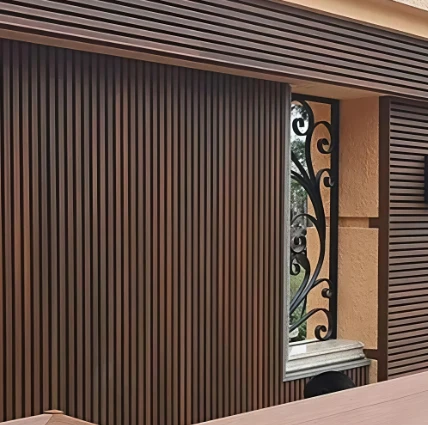
For the past ten years, almost every month I have been asked the same question by overseas customers: "It rains for months here-can WPC wall panels really be used outdoors?"
The people asking include contractors from Southeast Asia, distributors from the UK and Northern Europe, and developers from the Caribbean and West Africa. Their concern is entirely reasonable-traditional wood siding expands, warps, and grows mold in continuous rain and humid conditions, while aluminum composite panels are waterproof but often conflict with the design intent of a natural wood look.
My answer has always been: Yes, but only if you distinguish between "WPC material itself" and the "WPC wall system." If the material is right but the system is wrong, problems will still occur. If the material is wrong, even the best system only delays failure. As a sales manager responsible for overseas business at Haining Longtime Industry Co., Ltd. for more than fifteen years, I have handled too many cases. Below I will explain this from an engineering perspective, and then give you two real projects so you can see where the boundaries are.
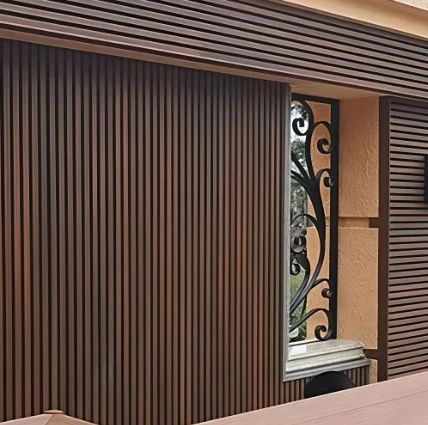
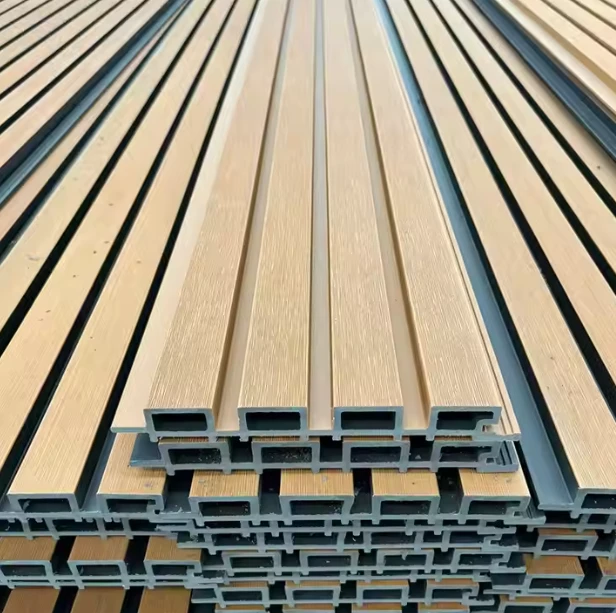
1. Conclusion first: It can be used in high-rainfall areas, but three conditions must be met
|
Condition |
Recommended practice |
Not recommended |
|
Material |
Outdoor-grade co-extruded WPC, with a water absorption target of ≤0.5%; for coastal/high-rainfall projects, ≤0.2% is recommended |
Indoor WPC used outdoors, ordinary single-extruded WPC, or products without outdoor application approval |
|
System |
Rainscreen system with a continuous air cavity behind the panels |
Directly fastening panels to the wall, sealing the bottom, or sealing all panel joints with caulk |
|
Installation |
Hidden clip/dry installation, ventilation openings at top and bottom with insect mesh, proper flashing details |
Tight-joint installation, no flashing, insufficient fixing spacing, or sealing the bottom with caulk |
In one sentence: WPC is not a structural waterproofing layer; it is a decorative surface layer. In rainy regions, WPC must be used as part of a ventilated rainscreen system, not as a waterproof membrane.
2. Material: Is WPC actually afraid of water?
Many buyers assume that "WPC is just plastic plus wood flour, so it should be completely waterproof." That is only half true. The wood fiber content in ordinary WPC does have a tendency to absorb moisture. If the formulation and process are not adequate, long-term water exposure can still lead to thickness swelling and mold on the back. What really determines outdoor rain resistance is the quality of the co-extruded surface layer and the density control of the core.
For qualified outdoor-grade WPC wall panels used in high-rainfall areas, the water absorption of the co-extruded surface layer can usually be controlled below 0.5%, and high-quality products can reach around 0.2%. Some ASA co-extrusion systems achieve near-zero water absorption in both the core and the surface layer. The outdoor co-extruded series exported by Haining Longtime Industry is designed with a target of ≤0.2% water absorption, which is our minimum recommended threshold for coastal and high-rainfall projects. There is also a noteworthy test data point: qualified co-extruded WPC shows no cracking after being immersed in 100°C hot water for 72 hours, which indirectly indicates that the sealing effect of the dense surface layer is reliable.
Comparison of outdoor wall materials in high-rainfall environments
|
Material type |
Rain resistance |
Main risks |
Application recommendation |
|
Solid wood slats |
Medium to low |
Moisture expansion, joint height differences, internal mold |
Not recommended as a long-term outdoor main wall surface in high-rainfall areas |
|
Ordinary single-extruded WPC |
Medium |
Higher water absorption, fading, warping risk |
Not recommended for high-rainfall/coastal outdoor projects |
|
Co-extruded WPC |
High |
Moisture on the back of panels if the system is designed incorrectly |
Recommended, but must be installed with a ventilated rainscreen |
|
Aluminum composite/metal panels |
High |
Industrial appearance, conflict with wood-grain design intent |
Reliable waterproofing, but different decorative effect |
|
Fiber cement board |
High |
Requires coating maintenance, relatively heavy |
Usable, but construction and finish systems differ |
But material is only the baseline. WPC is not a structural waterproofing layer; it is a decorative surface layer. If you fasten WPC panels directly to the wall, seal the bottom, and leave no air circulation behind them, then even if the panel itself has very low water absorption, moisture trapped between the wall and the back of the panel will still cause mold, accumulated thermal expansion, and corrosion of fasteners.
3. The real decisive factor in high-rainfall environments: the rainscreen, not panel thickness
During the quotation stage, I often see customers focus entirely on "how thick the panel is" and "how much per square meter," while ignoring the invisible air cavity behind it. In rainy climates, the design of the moisture drainage path determines long-term project success more than the panel itself.
The correct approach is to maintain a continuous, unobstructed air cavity between the wall weather-resistive barrier (WRB) and the back of the WPC panel. Common air cavity depths in industry engineering standards are 25mm to 30mm; commercial projects should be at least 25mm (about 1 inch). This cavity serves three purposes: first, it allows incidental rainwater to drain downward along the back of the panel; second, it allows water vapor to evaporate and escape through top and bottom ventilation openings; third, it reduces heat accumulation behind the panel and reduces repeated stress on the fixing system caused by thermal expansion.
At the same time, ventilation openings must be provided at the top and bottom, with insect mesh, and the bottom closure must not be sealed. In areas with heavy rainfall accompanied by strong winds, rainwater can be pushed into panel joints by wind pressure. The drainage path and flashing details of the rainscreen system determine whether the wall interior gets damp more than the water absorption index of the panel itself. If the installation team treats WPC as a "tight-joint panel" and sticks it directly to the wall, then seals the bottom with caulk, the project in a rainy region is almost destined to develop mold on the back or joint swelling within two to three years-this is not a WPC material problem, but a system design problem.
Installation checklist for high-rainfall projects
|
Inspection item |
Recommended standard |
Why it matters |
|
Air cavity depth |
25–30mm; no less than 25mm for commercial projects |
Drainage, moisture removal, reduced thermal stress |
|
Ventilation openings |
Continuously provided at top and bottom, with insect mesh |
Creates upward and downward convection for moisture removal |
|
Bottom closure |
Must not be sealed; retain drainage outlet |
Prevents water accumulation in the cavity |
|
Fixing method |
Hidden clips/dry installation; increase fixing density according to wind pressure |
Allows thermal expansion and contraction; reduces risk of panels being lifted by strong wind |
|
Flashing details |
Install flashing at windows, corners, and edges |
Prevents rainwater backflow under strong wind and rain pressure |
|
Wall waterproofing layer |
WRB complete and undamaged |
WPC cannot replace wall waterproofing |
|
Joint treatment |
Do not blindly caulk all joints; follow system design requirements |
Avoid sealing off the moisture removal path |
|
Coastal projects |
Prefer ASA co-extrusion and salt-spray-resistant hardware |
Salt spray + high humidity accelerate deterioration |
4. Two real projects: What happened when heavy rain actually arrived
Case 1: A holiday apartment in Hainan Island-typhoon day, a window was left open all day
Hainan Island is one of the regions in China most frequently affected by typhoons, with high salt spray, high humidity, and short-duration heavy rainfall as normal conditions. One of our customers has a holiday apartment in Hainan. The wall surface uses Haining Longtime Industry's outdoor co-extruded WPC grille panels in Smoked Oak, installed with hidden clips in a dry system.
In the first typhoon season after project delivery, a typhoon passed through and one balcony window was left open. Rainwater was driven directly indoors by strong wind, and the wall surface was soaked by rainwater for nearly a whole day. When the customer called me the next day, he was very anxious and asked whether the panels would be ruined. I told him: first absorb the standing water with a dry cloth, do not use a hot air blower aggressively, do not pry off the panels, and let it dry naturally with ventilation.
A few days later he sent photos and a message: after drying, the wall surface looked almost the same as when installed, with no visible swelling, bulging, or warping, and no peeling or discoloration of the surface texture. The key point of this case is not that "WPC is completely waterproof," but that the sealing of the co-extruded surface layer plus the slight deformation space provided by the dry hidden-clip system allowed the panels to return to a stable state after extreme short-term water exposure, instead of trapping moisture between the panel and the wall.
Case 2: An old villa near West Lake in Hangzhou-a three-year comparison with solid wood slats
Around the same period, I came into contact with another customer at an old villa near West Lake in Hangzhou. During renovation in 2021, he selected imported North American black walnut solid wood slats for the main living room wall and the terrace wall.
The first year was fine. After the second plum rain season, several wood slats in the terrace corner began to show slight skewing that was not easy to notice with the naked eye. By the third year, problems broke out intensively: three sections of the living room wall showed obvious height differences at the joints, the bottoms of the slats turned black, mold seeped outward from inside the wood core, and some areas of the wood slats could no longer be repaired by sanding.
Comparison of the two cases
|
Comparison item |
Hainan holiday apartment |
Hangzhou West Lake old villa |
|
Material |
Outdoor co-extruded WPC grille panels |
Imported North American black walnut solid wood slats |
|
Installation system |
Hidden clip dry installation, ventilated rainscreen |
On-site solid wood installation, wood wax oil finish |
|
Extreme event |
Typhoon rainwater intrusion, wall soaked for nearly one day |
Continuous high-humidity environment during plum rain season |
|
Result |
After drying, no obvious swelling, bulging, or warping |
In the third year, joint height differences, blackened bottoms, internal mold |
|
Key conclusion |
Co-extruded material + dry system has short-term water exposure recovery capability |
Solid wood has high long-term outdoor risk in humid and rainy areas |
Taken together, these two cases send a very clear message: in high-rainfall and high-humidity areas, solid wood slats "looking good for three years" is a common pattern, while a correctly installed co-extruded WPC wall system can maintain structural and appearance stability after short-term extreme water exposure. However, it must be noted that WPC's advantage is built on "outdoor-grade co-extruded product + ventilated dry installation," and cannot be replicated by simply fastening any "WPC panel" to the wall.
5. FAQ: Common questions about outdoor WPC wall panels in high-rainfall areas
Q1: Can WPC wall panels be used in places where it rains continuously for a month?
A: Yes, but outdoor-grade co-extruded WPC must be used and installed as a ventilated rainscreen system. Continuous rain itself is not the biggest problem; the biggest problem is that moisture cannot escape between the wall and the back of the panel. As long as the air cavity, top and bottom ventilation openings, and flashing details are in place, high-rainfall areas can use it normally.
Q2: Will WPC panels absorb water and swell?
A: Ordinary single-extruded WPC has higher risk; the surface water absorption of qualified co-extruded WPC can usually be controlled below 0.5%, and high-quality products can reach around 0.2%. For coastal and high-rainfall projects, Haining Longtime Industry's outdoor co-extruded series recommends selecting products with a target of ≤0.2% water absorption.
Q3: Can it be used in coastal high-salt-spray areas?
A: Yes, but it is recommended to prioritize ASA co-extrusion systems and ensure that hardware and fasteners have salt-spray resistance. After installation, regularly inspect fasteners and edge closure details.
Q4: In high-rainfall areas, is wall waterproofing still needed when using WPC?
A: Yes. WPC cannot replace the wall weather-resistive barrier (WRB). The correct order is: first solve wall waterproofing and drainage, then discuss panel selection. If the WRB is damaged or leaking, even the best WPC panels cannot prevent long-term moisture inside the wall.
Q5: Is maintenance troublesome?
A: Co-extruded WPC maintenance is usually relatively simple: regular clean water rinsing and inspection of ventilation openings and flashing. Do not use strong solvents or a high-pressure water jet close-up on panel joints and edge closures.
6. Three practical recommendations for buyers in high-rainfall areas
First, write "co-extruded" into the specification, not just "WPC." Ordinary single-extruded WPC and co-extruded WPC differ significantly in outdoor rain resistance. Procurement specifications should explicitly require a co-extruded surface layer, with a water absorption target of ≤0.5%; for high-rainfall/coastal projects, ≤0.2% is recommended. At the same time, confirm that the product has outdoor application approval, rather than being an indoor decorative panel converted for outdoor use.
Second, include the installation system in supplier evaluation. A supplier that only sells panels and does not provide air cavity depth recommendations and edge closure detail drawings is risky in high-rainfall projects. A qualified outdoor WPC supplier should be able to clearly explain: how deep the air cavity should be, the relationship between battens and panel direction, how to make the bottom ventilation opening, and whether fixing spacing needs to be increased in strong-wind areas. Haining Longtime Industry provides detail diagrams and installation key points with export projects for exactly this reason-the panel is a semi-finished product; the system is the finished product.
Third, distinguish between "short-term water exposure" and "long-term enclosed dampness." The Hainan case demonstrates recovery capability after short-term extreme rainwater intrusion; but if the wall itself has leaks, the WRB is damaged, or bottom drainage is sealed, then even the best WPC panels cannot prevent long-term moisture inside the wall. In rainy areas, first solve wall waterproofing and drainage, then discuss panel selection-this order cannot be reversed.
James Miller
Senior Sales Manager
Haining Longtime Industry Co., Ltd.
20 years of experience in building materials export, specializing in the application and implementation of outdoor WPC wall systems under complex climate conditions.