


Opening: A Question I Keep Being Asked
Over the past fifteen years in the building materials industry-especially since joining Haining Longtime Industry Co., Ltd. to oversee overseas markets-there is one question customers ask me almost every week: "Can PU stone panels really be used in high-traffic areas?"
Hotel lobbies, shopping mall corridors, airport terminals, chain restaurants, office building halls… These places see thousands, even tens of thousands, of people pass through every day. Walls are brushed by luggage carts, hit by trolleys, and touched by countless hands. What owners and designers worry about most is this: can this lightweight panel that looks like natural stone actually hold up?
My answer has always been: Yes-but only if you choose the right product and understand its performance limits. In this article, I will explain this question thoroughly from the perspective of an industry expert, drawing on our company's real project experience.
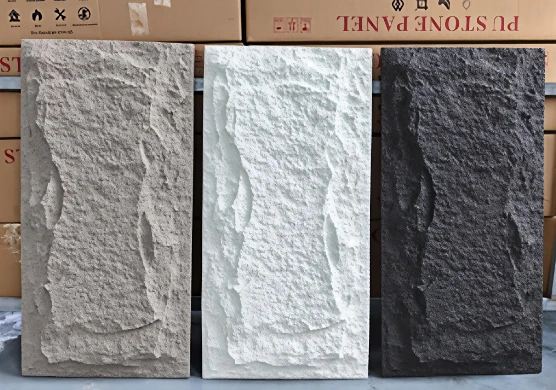
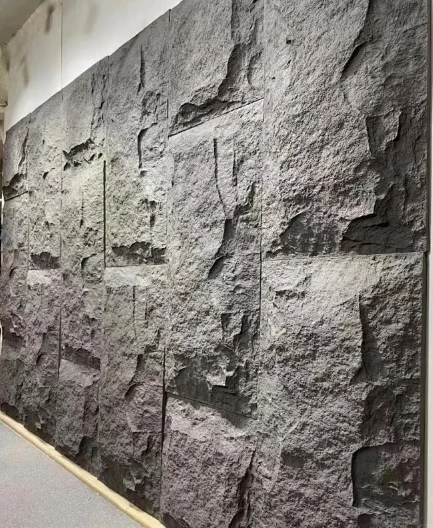
1. What High-Traffic Areas Really Demand from Wall Materials
Before discussing whether PU stone panels are suitable, we must first define what "high traffic" actually means. Based on our project tracking data, high-traffic areas pose four core challenges for wall materials:
- Impact resistance. Luggage carts, trolleys, shopping carts, and children running into walls-these dynamic impacts are the leading cause of wall damage. Some research data shows that in airport baggage claim areas, rolling luggage causes about 72% of floor/wall damage.
- Abrasion resistance. Continuous friction from frequent foot traffic, as well as repeated wiping during cleaning, will gradually wear down the surface.
- Cleaning and maintenance. High-traffic areas require frequent cleaning. The material must withstand regular cleaning agents, and its surface must not easily trap dirt.
- Fire safety. Commercial buildings-especially hotels and shopping malls-have strict regulatory requirements for the fire rating of materials.
2. Why Are PU Stone Panels Up to the Challenge of High-Traffic Areas?
Material Structure Determines the Performance Ceiling
The core material of PU stone panels is high-density polyurethane, foamed and molded through precision molds to fully replicate the texture details of natural stone. Their key performance advantage lies in this: the high-density polymer formulation gives the panels excellent structural integrity, impact resistance, and long-term durability.
Our Longtime series products use high-density rigid polyurethane foam, with a density of up to 220+ kg/m³, flexural strength ≥80 MPa, and impact strength ≥50 kJ/m² (GB/T 1732 standard). What does this mean? A standard-size PU stone panels can support a suspended object of more than 50 kg without deforming.
The "Elastic Recovery" Advantage in Impact Resistance
Unlike natural stone or ceramic tile, PU stone panels handle impact through elastic recovery rather than rigid resistance. In comparative tests, PU stone scored 8.5/10 for impact resistance (showing elastic recovery), while natural stone scored 6/10 (showing surface cracking), and ceramic tile performed even worse.
This elastic recovery characteristic is crucial in high-traffic areas-after being struck, the panel can rebound and recover instead of leaving permanent cracks or dents. Our products also undergo professional impact testing, including drop-hammer impact tests, simulating scenarios from minor bumps to larger impacts, confirming that the panels will not crack or be damaged after withstanding the impacts of daily use.
Fire and Water Resistance: Hard Thresholds for Commercial Spaces
In terms of fire performance, our PU stone panels achieve a Class B1 fire rating, and some premium models offer a Class A non-combustible option. This enables them to meet the fire safety codes for public commercial spaces such as hotels, shopping malls, and office buildings.
In terms of water resistance, the products achieve an IPX6 waterproof rating. The surface has a non-porous structure, does not absorb water, and does not mold-a key advantage for high-traffic areas that require frequent wet cleaning.
3. Real Cases: What Two Projects Tell You
Case 1: Boutique Hotel Corridor Wall Renovation
Project background: The client is a boutique hotel in Southeast Asia with about 120 guest rooms. The hotel corridor is a typical "high-traffic + high-visual-demand" area-hundreds of people pass through every day, and it also serves as a display space for the hotel's brand image, so aesthetic requirements are extremely high. The original walls used ordinary paint plus partial stone decoration. After three years of operation, they showed obvious wear, stain penetration, and localized peeling.
Client pain points: Traditional natural stone renovation is costly, takes a long time, and requires reinforcing the wall structure to bear the weight of the stone. Although paint solutions are cheaper, their service life is too short.
Our solution: We recommended a medium-size stone panel product from the Longtime Stone Pane Series, 30 mm thick (Model A Series), installed directly over the existing walls using nail-free adhesive mounting-no need to remove the old walls or reinforce the wall structure.
Project results:
- Installation efficiency: Two workers can complete about 150–200 m² of installation per day. The entire corridor renovation was completed within 5 days, far faster than the estimated 3-week schedule for a natural stone solution.
- Wall load: PU stone panels weigh only about one-quarter as much as natural stone, so no additional structural support is needed at all.
- Post-operation performance: After project delivery, we tracked the walls for 12 months. There was no cracking, no warping, and no surface deformation. Only routine wiping with a damp cloth is needed to maintain their appearance.
- Cost comparison: Taking into account materials + labor + business interruption loss, the overall cost was about 45% lower than the natural stone solution.
Client feedback: During a follow-up visit, the hotel's operations director said something that left a deep impression on me: "We originally thought that within our budget we could only achieve something 'acceptable to look at,' but instead we got something 'beautiful and durable.'"
Case 2: Automotive Service Chain Exterior Facade and Lower Walls
Project background: This is a project from the North American market. The client is an automotive service and transmission repair chain brand that needed to upgrade the exterior facade entrance areas and lower walls of its stores. The "high-traffic" nature of this scenario is very special-not only do people enter and exit, but vehicles also pass close by. Walls may be bumped by car doors, splashed by tires, and washed by cleaning equipment.
Client pain points: The previously used stone-look coating faded, cracked, and peeled within two years. A natural stone solution was quoted too high, and local construction labor costs were extremely high.
Our solution: We recommended the K Series from the Longtime Rock Stone Series (1200 × 600 mm, 50 mm thick) for the entrance feature walls and lower wall areas. This series simulates the cross-section of large rocks, with a bold, natural texture that is highly suitable for the industrial style positioning of automotive service spaces.
Project results:
- Installation method: The panels can be cut with standard woodworking tools and installed using high-strength construction adhesive, reinforced with mechanical fasteners. The entire exterior facade construction was completed over a single weekend without affecting normal store operations.
- Weather resistance: The products are treated with a UV-stable coating to resist fading, cracking, and weathering. After two full winter-summer cycles, the wall color and texture remained stable.
- Stain resistance: Oil stains and cleaning fluid splashes common in automotive service settings can be removed with mild soapy water, leaving no penetrating stain residue on the panel surface.
- Maintenance cost: Compared with the previous solution, which required repainting every two years, PU stone panels require only occasional rinsing with water.
Client feedback: The facilities management manager of the chain brand told us that they have already rolled out this solution to three additional stores.
4. How to Determine Whether Your Project Is Suitable for PU Stone Panels?
Based on our experience serving hundreds of projects worldwide, I recommend a quick assessment using the following dimensions:
| Evaluation Dimension | Suitable for PU Stone Panels | Requires Careful Evaluation |
|---|---|---|
| Impact type | People bumping into walls, trolleys, luggage carts | Continuous impact from heavy machinery |
| Cleaning frequency | Routine wiping, periodic wet cleaning | Close-range high-pressure washing (pressure must be controlled) |
| Fire requirements | B1 rating is sufficient; Class A available | Scenarios where special fire codes require Class A |
| Installation conditions | Flat walls, indoor or semi-outdoor | Extremely high temperatures or continuously immersed environments |
| Design needs | Stone visual effect + lightweight | Scenarios requiring structural load-bearing |
One key practical recommendation: When deep-texture products (such as the Mushroom Stone Series) are used in high-traffic areas, be aware that dust may accumulate in the recessed areas of the texture. This does not mean they cannot be used; rather, the cleaning plan should include a soft-bristle brush as part of the cleaning process. For areas such as corridors and passageways, I usually recommend the medium-texture products from the Stone Pane Series-they retain the visual layering of stone while being easier to maintain daily.
Conclusion
Back to the original question: Are PU stone panels suitable for high-traffic areas?
My answer is: For the vast majority of commercial and residential high-traffic scenarios, PU stone panels are not only a viable choice, but in many cases the optimal choice. They solve the dilemma between natural stone-"beautiful but too heavy, too expensive, and too hard to maintain"-and paint-"cheap but not attractive and not durable."
But I want to emphasize one point: no single material is suitable for every scenario. The key to choosing PU stone panels is understanding your project's specific requirements for fire safety, impact resistance, and cleaning/maintenance, and then selecting the product with the corresponding specifications. This is exactly the value that Haining Longtime Industry Co., Ltd. provides as a manufacturer with nearly two decades of industry experience: we do not just sell panels; we help customers find the solution that best fits their project needs.
If you are planning a project in a high-traffic area, welcome to contact us for product samples and technical data sheets. Let William and the team help you make a data-backed decision.


