Flexural strength is a critical mechanical property that measures a material's ability to resist bending forces without breaking. In the context of building and construction materials, understanding the flexural strength of a product is essential for ensuring its structural integrity and performance in various applications. As a supplier of PU Fortress Stone, I am often asked about the flexural strength of our product. In this blog post, I will delve into what flexural strength is, how it is measured, and the flexural strength characteristics of PU Fortress Stone.
Understanding Flexural Strength
Flexural strength, also known as bending strength, is the maximum stress a material can withstand while being bent before it fractures. When a force is applied to a beam or a panel, it causes the material to bend. The outer fibers of the bent material are subjected to tensile stress, while the inner fibers experience compressive stress. The flexural strength is determined by the maximum tensile stress that the outer fibers can endure before failure.
The flexural strength of a material is influenced by several factors, including its composition, density, and manufacturing process. For instance, materials with a more uniform structure and higher density tend to have better flexural strength. Additionally, the presence of any internal defects or voids can significantly reduce the flexural strength of a material.
Measuring Flexural Strength
There are several standard test methods for measuring the flexural strength of materials. One of the most commonly used methods is the three - point bending test. In this test, a sample of the material is placed on two supports, and a load is applied at the mid - point between the supports. The load is gradually increased until the sample breaks. The flexural strength is then calculated using the following formula:
[ \sigma_f=\frac{3PL}{2bh^{2}} ]
where (\sigma_f) is the flexural strength, (P) is the maximum load at failure, (L) is the span length between the supports, (b) is the width of the sample, and (h) is the height of the sample.
Another method is the four - point bending test, which is similar to the three - point bending test but with two loading points instead of one. The four - point bending test is often used for larger samples or when a more uniform distribution of stress is required.


Flexural Strength of PU Fortress Stone
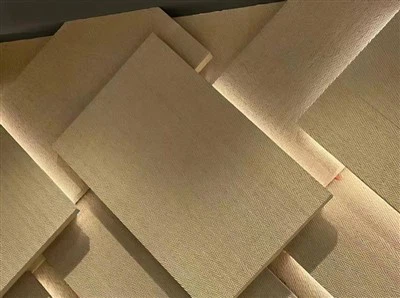
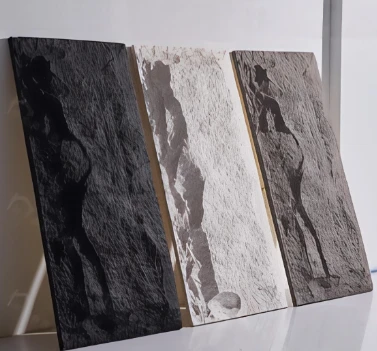
PU Fortress Stone is a high - quality synthetic stone product made from polyurethane (PU). Polyurethane is a versatile polymer known for its excellent mechanical properties, including good flexural strength. Our PU Fortress Stone is engineered to have a high flexural strength, making it suitable for a wide range of applications, from interior wall cladding to exterior facade systems.
The flexural strength of our PU Fortress Stone typically ranges from [X] MPa to [Y] MPa, depending on the specific formulation and manufacturing process. This level of flexural strength allows the product to withstand normal handling, installation, and environmental stresses without cracking or breaking.
One of the key advantages of PU Fortress Stone is its ability to be molded into various shapes and sizes. This flexibility in design does not compromise its flexural strength. Our advanced manufacturing techniques ensure that the material has a consistent structure throughout, which contributes to its high flexural strength.
Applications of PU Fortress Stone Based on Flexural Strength
The high flexural strength of PU Fortress Stone makes it an ideal choice for many construction and design applications.
Interior Wall Cladding
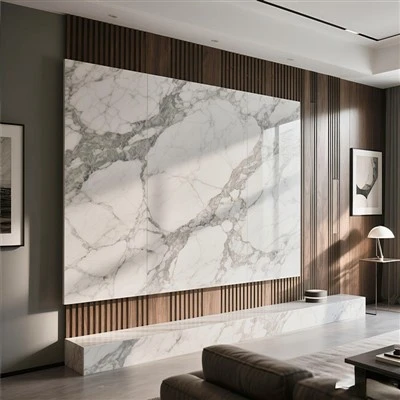
For interior wall cladding, PU Fortress Stone can be used to create a unique and stylish look. Its high flexural strength ensures that the panels can be easily installed on walls without the risk of cracking during handling or due to minor impacts. Whether you are looking for a rustic, modern, or traditional look, Moisture Resistant Cultured Stone Panels can provide the perfect solution.
Exterior Facade Systems
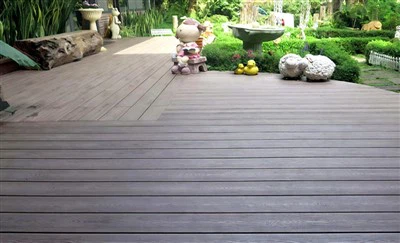
In exterior facade systems, the material is exposed to various environmental factors, such as wind, rain, and temperature changes. The high flexural strength of PU Fortress Stone allows it to withstand these stresses and maintain its structural integrity over time. Our PU Rock Stone is a popular choice for exterior facades, as it offers a natural stone look with the added benefits of a synthetic material.
Decorative Elements
PU Fortress Stone can also be used to create decorative elements, such as columns, arches, and moldings. Its high flexural strength enables the creation of complex and detailed designs that would be difficult or expensive to achieve with natural stone. Our 3d pu wall panels are a great example of how PU Fortress Stone can be used to add a touch of elegance and uniqueness to any space.
Conclusion
In conclusion, the flexural strength of PU Fortress Stone is an important property that contributes to its performance and versatility in various applications. Our product offers a high level of flexural strength, thanks to its advanced polyurethane formulation and manufacturing process. Whether you are a contractor, architect, or designer, PU Fortress Stone can provide a cost - effective and durable solution for your construction and design projects.
If you are interested in learning more about our PU Fortress Stone or would like to discuss your specific project requirements, please feel free to contact us. We are always happy to assist you with your inquiries and provide you with the best possible solutions.
References
- ASTM D790 - Standard Test Methods for Flexural Properties of Unreinforced and Reinforced Plastics and Electrical Insulating Materials.
- Callister, W. D., & Rethwisch, D. G. (2011). Materials Science and Engineering: An Introduction. Wiley.