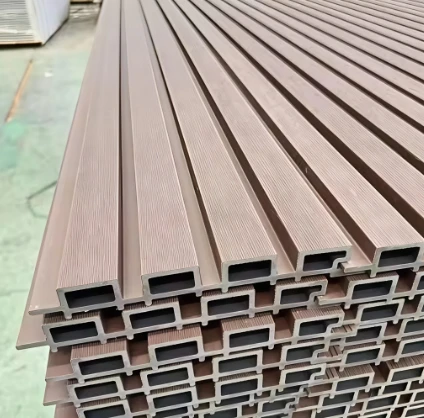
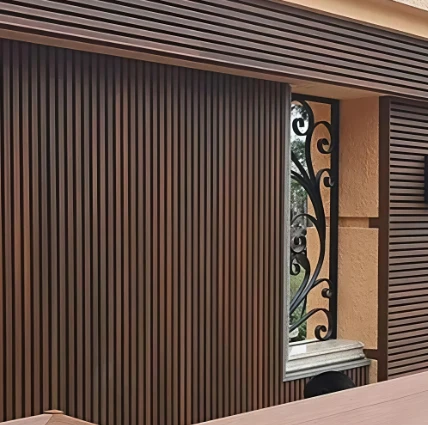
Many customers ask us one question after purchasing WPC wall panels: Can these panels be installed by myself? The answer is yes-but only if you understand the material characteristics of WPC panels, the substrate conditions, the fixing method, and the rules of thermal expansion and contraction. WPC wall panels are not a product that can simply be "drilled and fixed onto the wall at will." Especially in semi-outdoor areas, balconies, exterior wall decoration, courtyard walls, and similar applications, installation details directly affect whether the panels will later bulge, become loose, accumulate water, develop dirty joints, or even have their overall service life shortened.
As Senior Sales Manager of Haining Longtime Industry Co., Ltd., my team and I have long served overseas building material distributors, contractors, and end users. Below, from the perspective of an industry professional, I will systematically explain the most important points to pay attention to when installing WPC wall panels by yourself.

1. Before installation: confirm the substrate and installation environment
The first step in DIY installation of WPC wall panels is not buying screws-it is checking the wall. The substrate must be solid, flat, dry, and clean. If the wall has hollow areas, peeling, oil stains, loose old coatings, or obvious unevenness, the substrate should be treated first. As a general recommendation, substrate flatness should be controlled within a tolerance of 3 mm per 2 meters, unless otherwise specified in the product installation instructions.
For outdoor or semi-outdoor walls, pay special attention to drainage and ventilation. Do not install WPC wall panels directly tight against damp, sealed, or water-retaining walls. It is recommended to use battens or a ventilated drainage layer to leave an air circulation space between the wall and the panels, preventing long-term water accumulation at the bottom.
Key points to check before installation:
- Is the wall solid, without hollow areas, looseness, or peeling?
- Is the wall flat, and have obvious uneven areas been leveled?
- Is the substrate dry, without water seepage, dampness, or mold?
- Is the wall clean, without oil stains, dust, or laitance?
- For outdoor or semi-outdoor applications, have battens, ventilation, and drainage been considered?
2. Thermal expansion and contraction joints must be reserved
This is the most common and most easily overlooked issue in DIY installation of WPC wall panels. WPC materials expand and contract to a certain extent with temperature changes, especially dark-colored panels exposed to direct sunlight. Expansion joints should be reserved at panel ends, inside edge trims, and internal and external corners according to the manufacturer's recommendations. Many homeowners, in pursuit of "perfectly tight" joints, push panels directly against edge trims or wall corners. As a result, after high temperatures in summer, the panels expand and may show slight bulging, waviness, or loose fixing points.
Remember: WPC wall panels should not be installed as tightly as possible; the material needs "room to breathe." As a general reference, approximately 5–10 mm may be reserved between panel ends and edge trims, but the actual value must be determined based on panel length, local temperature differences, installation method, and product instructions. Internal and external corners, bottom closures, top edges, and window edges must also balance expansion, drainage, and sealing. They should not simply be fully sealed.
3. Fasteners and fixing methods must be correct
When fixing WPC wall panels, use fasteners suitable for outdoor environments, such as stainless steel or anti-corrosion galvanized screws. Avoid ordinary carbon steel screws, which can rust and stain the panel surface. Pre-drill or use appropriate tools during fixing, and do not overtighten, as this may crush the panel surface or restrict panel expansion. Screw positions should preferably fall on battens or structural support points, with reasonable spacing.
If fixing directly to the wall, the wall material and load-bearing capacity must be confirmed. If installing with battens, ensure that batten spacing meets product requirements and check that the battens themselves are anti-corrosion treated, firm, and flat. For outdoor, semi-outdoor, uneven wall, or ventilation/drainage-required applications, a batten system is generally recommended.
Comparison table: fixing methods and batten selection
|
Fixing method |
Suitable applications |
Advantages |
Points to note |
|
Direct fixing to wall |
Indoor or specific applications where the substrate is very flat and dry |
Relatively simple installation |
Must confirm substrate strength and moisture protection; limited expansion space |
|
Batten installation |
Outdoor, semi-outdoor, uneven walls, or applications requiring ventilation and drainage |
Better flatness; more controllable ventilation and drainage |
Battens must be anti-corrosion treated; spacing must follow product requirements |
|
Edge trim fixing |
Internal/external corners, window edges, top, and bottom |
Neat finishing and more complete structure |
Expansion space must be reserved inside edge trims |
|
Fastener selection |
All installation scenarios |
Anti-corrosion and durable |
Ordinary carbon steel screws are not recommended; avoid overtightening |
4. Edge trims, corners, and bottom closures determine detail quality
The quality of WPC wall panel installation often depends not on the main surface but on the edge details. Internal and external corners, window edges, door edges, top edges, and bottom closures should all use matching edge trims. The bottom should not be placed directly on the ground; leave a certain gap above ground level to prevent capillary rise of rainwater and mud contamination. Top edges and window edges should be properly flashed and sealed, but do not seal all gaps completely-drainage and ventilation must still be considered.
Common DIY mistakes include: pushing panel ends tight against edge trims, overtightening screws, placing the bottom directly on the ground, installing directly onto a damp substrate, using ordinary carbon steel screws, and fully sealing all edge gaps. These problems may not be obvious in the short term, but over time they can easily lead to bulging, looseness, water accumulation, rust, and dirty joints.
5. Cutting, cleaning, and safety protection
DIY cutting of WPC wall panels produces debris. It is recommended to wear safety goggles, a mask, and gloves. Use a fine-toothed saw blade or suitable cutting tool, and keep cuts flat and clean. After installation, clean with a neutral detergent and a soft brush. Do not use strong solvents, steel wool, or a high-pressure water gun at close range against the panel surface. Any adhesive marks or stains after construction should be cleaned promptly.
6. Quick reference table for key DIY installation points
|
Key stage |
Installation points |
Common risks |
|
Substrate treatment |
Solid, flat, dry, and clean; consider battens and ventilation/drainage for outdoor applications |
Hollow areas, water accumulation, mold, looseness |
|
Expansion joints |
Reserve at panel ends, inside edge trims, and corners according to instructions |
High-temperature bulging, waviness, loose fixing points |
|
Fasteners |
Use stainless steel or anti-corrosion fasteners; do not overtighten |
Rust staining, crushed panel surface |
|
Edge and closure finishing |
Use matching edge trims; keep bottom off the ground; balance flashing and drainage at top and window edges |
Dirty joints, water accumulation, cracked closures |
|
Safety and cleaning |
Wear protective equipment; use neutral detergent |
Cutting debris injuries, panel surface damage from strong solvents |
7. Two customer case studies
The following cases are compiled from customer feedback shared with Michael Wilson's team. Customer information has been anonymized.
Case 1: DIY courtyard wall project in Melbourne, Australia
A homeowner installed WPC wall panels by themselves in winter. To achieve neat joints, they pushed the panel ends directly against the metal edge trims without reserving expansion joints. After high temperatures in summer, slight bulging and waviness appeared on part of the wall. The customer later contacted us, and following our recommendation, they partially opened the edge trims, cut the panel ends, and re-reserved approximately 8–10 mm expansion joints. The problem was improved. This case shows that WPC wall panel installation must respect thermal expansion and contraction, especially in outdoor areas exposed to direct sunlight.
Case 2: Semi-outdoor balcony wall panel project in Singapore
A customer installed panels directly onto a damp substrate on a semi-outdoor balcony, with the bottom closure too tight. During the rainy season, water accumulated at the bottom for a long time, stains appeared at the joints, and some fixing points showed signs of looseness. We recommended that the customer rectify the substrate, add battens and ventilation/drainage gaps, leave a gap between the bottom and the ground, and replace the fasteners with anti-corrosion ones. After rectification, overall stability and cleaning maintenance were significantly improved. This case shows that in humid regions, waterproofing, drainage, and ventilation are more important than simply "fixing it firmly" when installing WPC wall panels.
8. DIY installation checklist
- Is the substrate solid, flat, dry, and clean?
- For outdoor/semi-outdoor applications, have battens, ventilation, and drainage been considered?
- Have expansion joints been reserved at panel ends and edge trims?
- Are fasteners anti-corrosion treated? Have they been overtightened?
- Is the bottom kept off the ground? Are window edges and top edges properly finished?
- Is installation carried out according to the product installation instructions of Haining Longtime Industry Co., Ltd.?
FAQ: Common questions about DIY installation of WPC wall panels
Q1: Can WPC wall panels be completely installed by myself?
A: Yes, but only if the substrate conditions are suitable, correct fasteners and edge trims are used, and expansion joints are reserved strictly according to the product installation instructions. For outdoor, semi-outdoor, and high-humidity areas, it is recommended to have the supplier review the installation plan first.
Q2: Do WPC wall panels always require expansion joints?
A: Yes. WPC materials expand and contract to a certain extent with temperature changes, especially at panel ends, inside edge trims, and corners. The specific joint value should be based on the product instructions, panel length, and local temperature differences.
Q3: Can WPC wall panels be installed directly onto an old wall?
A: They cannot simply be installed directly onto an old wall. First check whether the old wall is solid, flat, dry, and clean. If there are hollow areas, peeling, oil stains, or water seepage, the substrate should be treated first before deciding whether to use battens.
Q4: Are battens required for outdoor installation of WPC wall panels?
A: In many outdoor and semi-outdoor applications, battens or a ventilated drainage layer are recommended, especially when the wall is damp, uneven, or prone to water accumulation. Battens can help with leveling, ventilation, and drainage, but the battens themselves must also be anti-corrosion treated and firmly fixed.
Q5: What screws should be used to fix WPC wall panels? Can the bottom be placed directly on the ground?
A: Stainless steel or anti-corrosion galvanized screws are recommended. Avoid ordinary carbon steel screws, which can rust and stain the panel surface, and do not overtighten. The bottom should not be placed directly on the ground; leave a certain gap above ground level to prevent capillary rise of rainwater, mud contamination, and long-term water accumulation.
Conclusion
WPC wall panels are suitable for DIY installation, but "suitable" does not mean "simple." What truly determines installation quality is substrate treatment, expansion joints, fixing methods, edge finishing, and drainage details. As Senior Sales Manager of Haining Longtime Industry Co., Ltd., I recommend that every DIY customer confirm the product installation instructions before construction and, when necessary, have the supplier review the installation plan. Only when installed properly can WPC wall panels deliver their due advantages in appearance, durability, and maintenance cost.
If you are planning a WPC wall panel project, you are welcome to contact the Haining Longtime Industry Co., Ltd. team. We can provide recommendations based on your wall conditions, climate environment, and installation method.
Michael Wilson
Senior Sales Manager
Haining Longtime Industry Co., Ltd.